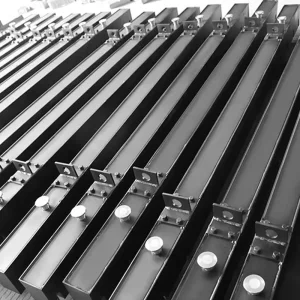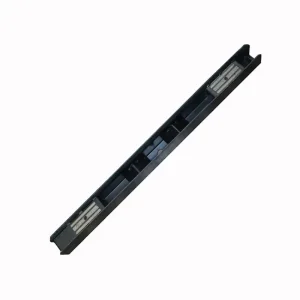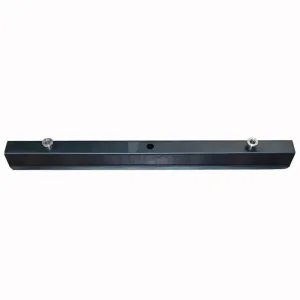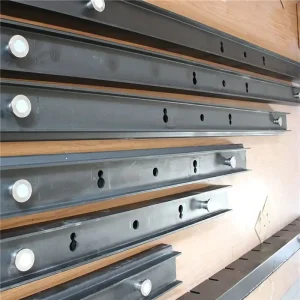
The Czech Republic, often referred to as the industrial heart of Central Europe, is witnessing a massive shift in its construction methodology. Driven by the "National Development Plan," there is an increasing reliance on precast concrete components for residential housing, industrial warehouses in the Liberec and Brno regions, and large-scale infrastructure like the expansion of the D1 motorway. However, the market faces two critical challenges: a rising shortage of skilled masonry labor and the urgent need for carbon footprint reduction.
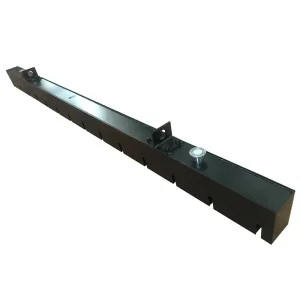
Magnetic formwork systems have emerged as the "Gold Standard" for modern Czech factories. Unlike traditional bolt-and-weld methods, magnetic shuttering systems allow for rapid reconfiguration of steel tables, reducing set-up time by up to 70%. This efficiency is paramount for local manufacturers who are striving to meet the European Union's Energy Performance of Buildings Directive (EPBD).
The technical trajectory for magnetic formwork in the Czech market is moving toward "Smart Shuttering." We anticipate the integration of RFID tags into magnetic boxes to track the lifespan and usage cycles within BIM (Building Information Modeling) environments. In Ostrava’s high-tech manufacturing hubs, we are seeing the transition from standard Neodymium (NdFeB) magnets to high-temperature resistant grades that can withstand the accelerated curing processes (heat treatment) common in winter months.
Future systems will focus on lightweight carbon-steel hybrids, providing the same 2100kg holding force while being 20% lighter, significantly improving the ergonomic safety for Czech workers. Our roadmap includes automated magnetic release mechanisms compatible with robotic arms, which are increasingly being deployed in the "Factory of the Future" initiatives across the Czech industrial landscape.
Why do Czech precast leaders look toward China for strategic partnership? It is no longer just about cost; it is about "Information Gain" and Supply Chain Resilience. Our China Factory 4.0 utilizes AI-driven precision CNC machining and automated magnetizing stations to ensure every unit exported to Prague meets the exact tolerance of ±0.2mm.
For a Czech factory, a delay in the supply of shuttering magnets can halt a multi-million Euro project. By leveraging our massive production capacity and strategic logistics partnerships (utilizing the China-Europe Railway Express reaching terminals in Prague and Pardubice), we offer a buffer against global supply shocks. This "Resilience-as-a-Service" ensures that Czech manufacturers can maintain their tight production schedules regardless of market volatility.
Compliance is the bedrock of authority in the EU market. Our products are engineered to exceed the safety requirements of CSN EN 13391 and the Eurocode frameworks. We provide comprehensive documentation in the Czech language, including magnetic force certification, safety protocols, and maintenance guidelines tailored to the local climate.
Our localization strategy involves dedicated account managers who understand the nuances of the Czech VAT system (DPH) and the specific logistics requirements of delivering to remote construction sites in the Krkonoše mountains or the industrial zones of Southern Bohemia.
When procurement officers in major Czech construction firms—such as those operating in the residential corridors of Prague or the industrial zones of Pardubice—evaluate magnetic formwork manufacturers, they focus on Total Cost of Ownership (TCO). A magnet box is not a commodity; it is a precision tool. Our engineering team provides "Value Engineering" consultations, helping factories optimize the number of magnets per table. By analyzing the lateral pressure of the concrete and the height of the formwork rail, we often find that clients can achieve superior stability with fewer, higher-quality 2100kg magnets compared to a larger quantity of inferior 900kg units.
This scientific approach to procurement is what sets industry leaders apart. In the Czech market, where the Průmysl 4.0 (Industry 4.0) initiative is a national priority, adopting our magnetic systems is a direct step toward digitalizing the shop floor. Our systems are compatible with laser projection systems used for positioning, ensuring that the precision achieved in the CAD phase is perfectly mirrored on the production bed.