Advanced Manufacturing of Custom Arc Magnets & Magnetic Assemblies
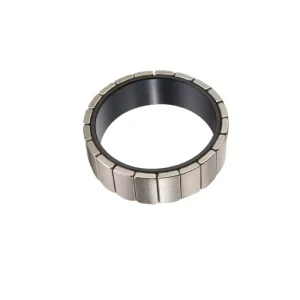
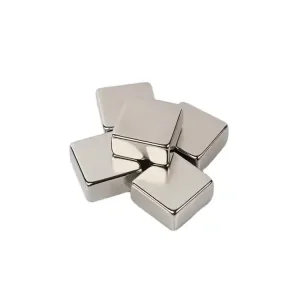
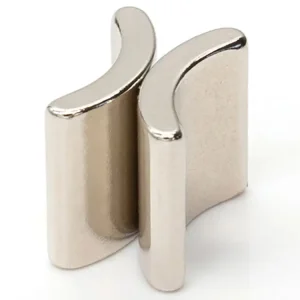
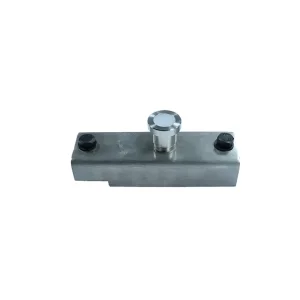
In modern high-performance engineering, the selection, design, and execution of magnetic components dictate the overall system efficiency, reliability, and lifespan of complex assemblies. As a premier custom arc magnet factory & company, we specialize in bridging the gap between magnetic material sciences and structural execution. Arc-segment magnets, primarily constructed from sintered Neodymium-Iron-Boron (NdFeB) and Samarium Cobalt (SmCo), are essential elements in electric motors, synchronous generators, Halbach arrays, and magnetic fixing devices.
Information Gain Concept: Unlike basic distributors, a vertically integrated custom arc magnet manufacturer controls everything from alloy chemistry preparation and vacuum induction melting to precision slicing, anti-corrosion coating deposition, and spatial magnetic characterization.
Understanding Arc Magnet Geometries & Magnetic Orientation
Unlike simple block or disc configurations, an arc-segment magnet introduces complex geometric parameters that require strict manufacturing tolerances. Key physical dimensions include the Outer Diameter (OD), Inner Diameter (ID), Arc Length (or Angle), and Thickness. Controlling these factors is crucial for minimizing air gaps in motor stators and rotors, which directly impacts torque efficiency and heat generation.
Furthermore, the vector of magnetization must be precisely aligned during the compaction process in a transverse magnetic field. The most common orientation types include:
- Radial Orientation: The flux lines run from the center curve to the outer curve, maximizing torque density in radial flux electric motors. This method requires complex tooling and high-precision sintering techniques.
- Diametrical / Axial Orientation: The magnetization direction is parallel to a diameter line or aligned along the length of the arc.
- Skewed Orientation: Engineered to reduce cogging torque in high-precision servo systems, preventing mechanical vibration and noise.
| Magnetic Material | Remanence (Br) | Coercivity (Hcj) | Max Working Temp | Key Applications |
|---|---|---|---|---|
| NdFeB (N52 Grade) | 1.42 - 1.47 T | ≥ 11 kOe | 80°C | High-density electric vehicles, consumer electronics, actuators |
| NdFeB (52EH Grade) | 1.33 - 1.38 T | ≥ 30 kOe | 200°C | Automotive traction motors, industrial aerospace servomotors |
| Sm2Co17 (High Temp) | 1.10 - 1.20 T | ≥ 25 kOe | 350°C | Downhole oil drilling, military radar, high-temp aerospace sensors |
Deep Technical Capabilities: NdFeB vs. Samarium Cobalt (SmCo)
Choosing the right alloy is critical when balancing performance against cost. Sintered Neodymium-Iron-Boron (NdFeB) provides the highest magnetic energy density ($BH_{max}$), making it ideal for compact motor profiles. However, in applications where operating temperatures exceed 150°C or where oxidation resistance is critical without coatings, Samarium Cobalt (SmCo) is the industry standard. SmCo displays exceptional thermal stability, featuring a very low reversible temperature coefficient of remanence ($\alpha Br \approx -0.035\%/^\circ\text{C}$).
Modern Anti-Corrosion Surface Treatments
Because NdFeB is prone to oxidation due to its high iron content, advanced surface coatings are necessary. Our factory applies a variety of coatings under cleanroom conditions, including:
- Ni-Cu-Ni (Nickel-Copper-Nickel): The standard multi-layer metallic plating for general industrial protection.
- Epoxy / Parylene Coating: Offers high electrical isolation and excellent chemical barrier properties in humid or acidic environments.
- Zinc (Zn) Plating: Cost-effective protection for components intended for structural integration.
- Everlube / Teflon Coatings: Specially designed for high-friction assemblies and automated insertion setups.