Direct supply from state-of-the-art Chinese manufacturing facilities. High coercivity, exceptional structural integrity, and custom design flexibilities.
Analysis of high-performance rare earth magnetic alloys, micro-magnetic modeling, and engineering parameters.
Modern precision engineering relies heavily on maximizing Maximum Energy Product (BH)max within highly constrained volumes. Small powerful magnets, primarily composed of sintered Neodymium-Iron-Boron (NdFeB) and Samarium-Cobalt (SmCo), undergo advanced powder metallurgy. Through precise crystal grain size control, factories achieve high remanence ($B_r$) and coercivity ($H_{cj}$), enabling high-density field concentration.
Temperature coefficients are critical when designing mini magnets. While NdFeB offers superior strength at room temperature, it experiences magnetic flux loss at elevated thresholds. To mitigate this, Chinese factories utilize Grain Boundary Diffusion (GBD) technology, selectively infusing Dysprosium (Dy) or Terbium (Tb). This enhances thermal thresholds up to 220°C (N52H to N45EH grades) without compromising core remanence.
Due to the high reactivity of Neodymium, thin-film surface finishes are crucial. Chinese magnet manufacturers provide advanced coating technologies, including triple-layer Nickel-Copper-Nickel (Ni-Cu-Ni), Electroless Nickel Plating, Epoxy Resins, Zinc (Zn), and Gold coatings. These finishes pass rigorous ASTM B117 salt spray testing for over 72 to 120 hours.
In high-precision applications such as aerospace sensors, micro-actuators, automotive drivetrain components, and heavy-duty precast concrete production equipment, small magnetic elements must perform with minimal dimensional variance. High-precision machining capabilities in modern factories now guarantee dimensional tolerances down to ±0.01mm. This degree of accuracy prevents air-gap variations, ensuring highly predictable and uniform magnetic field distributions.
QCM Magnet (Qianci Magnet) is an integrated engineering-driven manufacturer specializing in magnetic fixing components. We develop, manufacture, and distribute heavy-duty precast concrete magnet shuttering systems, formwork magnets, magnetic concrete chamfers, and insert magnets for international civil engineering and construction applications.
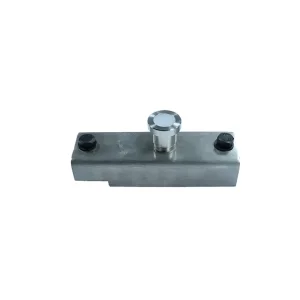
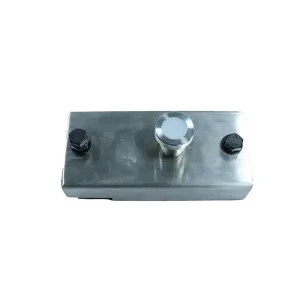
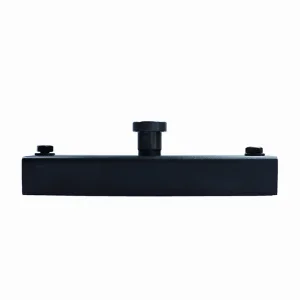
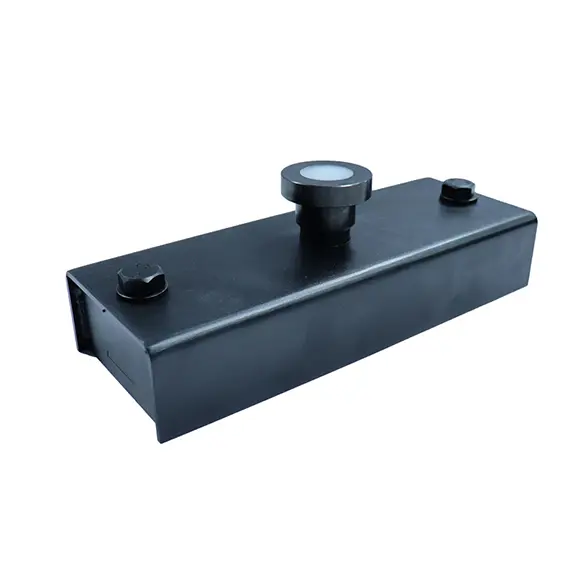
By combining high-energy neodymium magnet blocks with structural carbon steel casings, our products concentrate magnetic flux to generate high pulling forces. For instance, our precast concrete stepping shuttering magnets deliver up to 5300 lbs (2400 kg) of vertical holding force, preventing lateral movement during vibratory concrete consolidation. This eliminates the need for welding or drilling, protecting expensive steel formwork tables and extending their lifespan.
Qianci Magnet is a strong magnetic component factory, specializing in the production and research and development of formwork magnets, magnetic formwork, insert magnets, magnetic concrete chamferers and other products.
Our business mainly involves precast concrete magnetic system solutions, helping you to better carry out concrete element production.
Become a global leading manufacturer and excellent service provider of magnetic solutions for the precast concrete industry.
How global industries integrate small, high-intensity magnets into their localized manufacturing workflows.
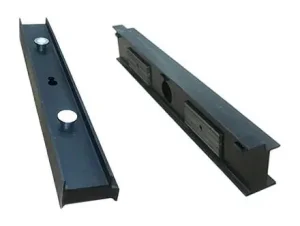
In industrialized construction regions like Germany, Scandinavia, and the United States, labor costs make manual shuttering expensive. Systems like Shuttering Magnets (600kg to 2100kg force) secure side forms to steel casting beds. This speeds up assembly, minimizes surface damage, and supports automation in robotic pallet-circulation systems.
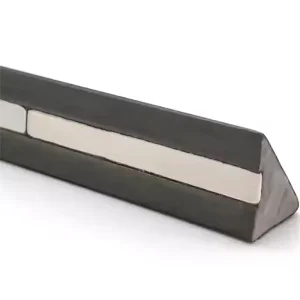
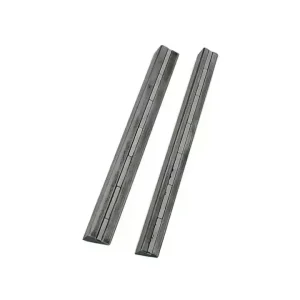
Creating clean chamfered corners on precast structural columns requires precise tools. Magnetic steel chamfer strips provide quick setup for beveled edges. Unlike traditional urethane or wood strips, magnetic steel chamfers resist wear, keep concrete out of joint gaps, and maintain straight lines over thousands of reuse cycles.
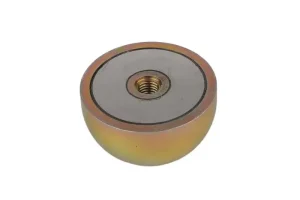
When casting concrete utility vaults, pipes, and electrical panels, threaded sockets and structural lifting anchors must be cast directly into the concrete. Dedicated insert magnets hold components in place against hydrostatic concrete pressure, keeping alignment true without drilling holes in the formwork.
The evolution of high-performance magnetic materials in response to resource availability, efficiency needs, and extreme operating conditions.
Industry efforts focus on minimizing heavy rare earth elements (Dy/Tb) while maintaining stability. New grain boundary diffusion techniques distribute these materials at crystal interfaces, achieving high coercivity with lower raw material costs.
Integrating sensor technology into heavy shuttering magnet boxes. These sensors measure real-time holding force, warning assembly crews of issues like surface scale or paint buildup that reduce clamping force.
Developing closed-loop recycling processes for sintered NdFeB magnets. Reclaiming magnet material from end-of-life wind turbines and electric drivetrains helps manufacturers reduce carbon footprint and build a more resilient supply chain.
Vertical Integration, Quality Standards, and Fast Turnaround Times
Evaluating a magnet manufacturer requires looking beyond unit costs. The true measure is the reliability of the supply chain. Chinese magnet manufacturers benefit from localized, vertical integration. Our facilities are located near processing and refinement hubs, ensuring steady access to key raw materials like Neodymium, Praseodymium, Samarium, and Cobalt.
By managing the entire production flow—from raw material alloying to vacuum induction melting, jet milling, magnetic field alignment compaction, sintering, heat treatment, plating, and testing—we ensure consistent quality at every stage.
Multi-station automatic presses and advanced slicing systems ensure shape consistency and dimensional accuracy across high-volume production runs.
Fluxmeters, demagnetization curve testers, and coordinate measuring machines verify magnetic performance and tolerances prior to dispatch.
Proximity to major ports like Ningbo and Shanghai enables seamless sea, air, and rail shipping options worldwide.
Ensuring compliance with international engineering, environmental, and safety regulations.
Strict quality management systems covering all stages of production, from initial raw material selection to final delivery.
Automotive-grade quality planning and risk assessment, ensuring high structural and thermal performance in critical applications.
Full environmental compliance, guaranteeing our plating and magnet alloy compositions are free of hazardous substances.
Compliance with European safety directives for magnetic systems with mechanical activation and release mechanisms.
Developments, events, and technical news from QCM Magnet.
Published: 2025-05-15
Precast concrete systems: Shuttering molds shape edges and openings on flat casting tables using magnetic fixation, while mold profiles require specialized magnetic clamp integration...

Published: 2025-04-30
QCM, a developer of specialized magnetic components, will present at UK Construction Week 2025 from May 7th to 9th. The display will showcase new magnetic systems designed to streamline precast concrete installations...
Technical guidance and sourcing information for magnet buyers and engineers.
The holding force is determined by three main elements: the magnet material grade (typically N35 to N52 NdFeB), the design of the iron core circuit (which concentrates flux lines along the contact surface), and the quality of the contact surface. The presence of paint, rust, scale, or air gaps on the steel casting bed can reduce clamping force.
Standard sintered neodymium magnets are rated for use up to 80°C. High-temperature grades use additions like Dysprosium and Terbium to push this threshold higher: H grades (up to 120°C), SH grades (up to 150°C), UH grades (up to 180°C), and EH grades (up to 200°C). Exceeding these limits causes permanent flux loss.
Ni-Cu-Ni triple-layer electroplating is the standard for dry to moderately humid environments. For harsh conditions, such as exposure to seawater or wet concrete mixtures, we recommend epoxy coatings or organic finishes like Everlube. These options provide superior resistance to moisture, salts, and chemical corrosion.
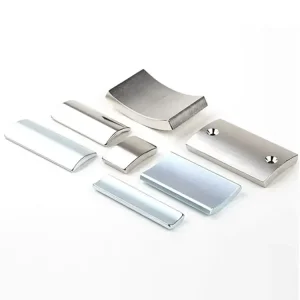
Yes. We offer customization for blocks, segments, discs, rings, countersunk profiles, and multi-pole magnetization assemblies. Our engineering team can work from your CAD files to produce custom designs and verify flux configurations.
Explore our full line of industrial-strength neodymium, SmCo, and structural magnetic formwork systems.