Engineered systems utilizing high-coercivity rare earth elements for heavy duty industrial fixation.
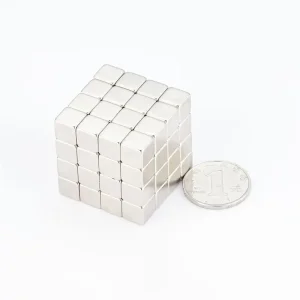
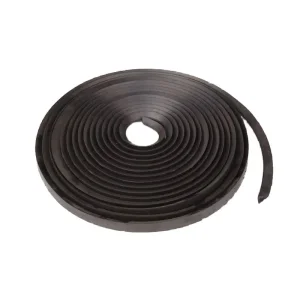
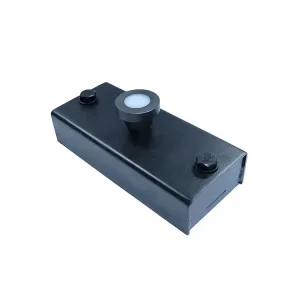
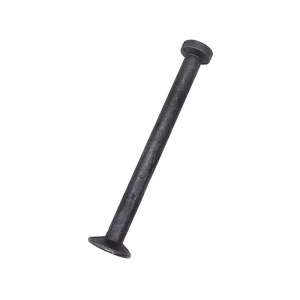
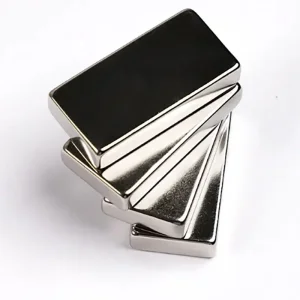
Neodymium magnets, or more accurately NdFeB (Neodymium-Iron-Boron) magnets, represent the absolute zenith of modern materials science. As permanent rare-earth magnets, they exhibit the highest magnetic energy product $(BH)_{max}$ available on the global market. Originating from advanced powder metallurgy processing, these materials have revolutionized countless industries by packing high-grade magnetic force into minimal spatial envelopes.
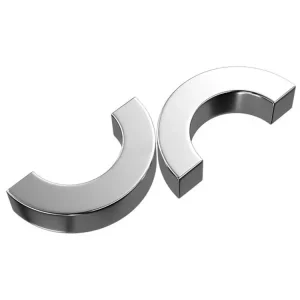
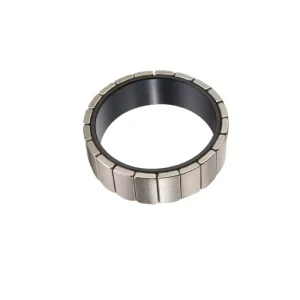
At QCM Magnet (Qianci Magnet), we recognize that standard solutions do not suffice for specialized industrial environments. Our manufacturing engineering focuses on high-coercivity grades (such as N52, N45H, N38EH) capable of operating at elevated temperatures without undergoing thermal demagnetization. By leveraging custom-engineered magnetic paths—including complex Halbach Arrays—we redirect magnetic flux to concentrate on target contact faces, achieving unprecedented hold-to-weight ratios.
By substituting mechanical clamping, drilling, and welding with permanent magnetic fixing platforms, modern civil engineering and precast concrete manufacturing plants save up to 70% of setup time, substantially extending the lifespan of precision casting beds.
Watch: Automated CNC Processing & High-Tolerance Quality Control at the QCM Magnet Factory.
Standardizing structural safety. Our rare-earth NdFeB chemical and mechanical parameters are tested and certified to international standards.
| Material Grade | Remanence $B_r$ (kG) | Coercivity $H_{cb}$ (kOe) | Intrinsic Coercivity $H_{cj}$ (kOe) | Max Energy Product $(BH)_{max}$ (MGOe) | Max Working Temp (°C) |
|---|---|---|---|---|---|
| N52 | 14.3 - 14.8 | ≥ 10.5 | ≥ 11.0 | 49.5 - 52.5 | 80 |
| N45H | 13.2 - 13.8 | ≥ 12.0 | ≥ 17.0 | 43.5 - 46.5 | 120 |
| N40SH | 12.4 - 12.8 | ≥ 11.8 | ≥ 20.0 | 38.5 - 41.5 | 150 |
| N38UH | 12.0 - 12.5 | ≥ 11.3 | ≥ 25.0 | 36.5 - 39.5 | 180 |
| N35EH | 11.7 - 12.1 | ≥ 11.0 | ≥ 30.0 | 33.5 - 36.5 | 200 |
Raw NdFeB material is highly susceptible to atmospheric oxidation. For industrial applications, particularly in precast concrete formwork and outdoor civil construction, we utilize highly optimized multilayer coating techniques. Our standard protection layers include triple-layer Nickel-Copper-Nickel (Ni-Cu-Ni) plating, high-durability epoxy resin coatings, and organic zinc-flake coatings, which undergo rigorous salt-spray chamber testing (exceeding 96 hours to 240 hours) to ensure resistance to rust, moisture, and alkaline concrete slurry.
By arranging magnetic poles in a spatially rotating sequence, we direct magnetic fields towards the working face of the shuttering system, boosting the shear and holding capacity while shielding the structural housing.
We add Dysprosium (Dy) and Terbium (Tb) through grain boundary diffusion (GBD) processing, reducing material costs while increasing thermal threshold boundaries, allowing magnetic clamps to work reliably in concrete curing kilns.
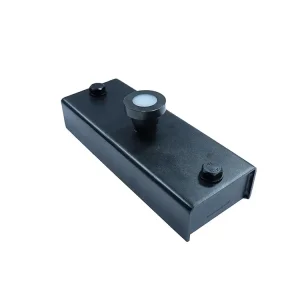
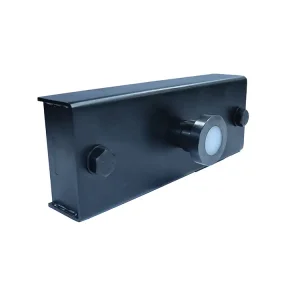
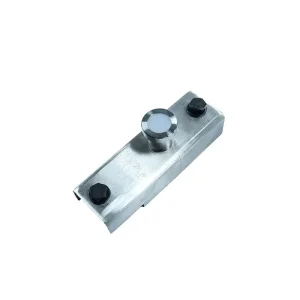
Every industrial shuttering magnet is certified using a digital vertical hydraulic pull tester. Our 2100kg magnetic boxes deliver structural-grade force (4600 lbs) verified by actual shear test metrics before shipping.
Qianci Magnet (QCM) is strategically located within China's primary rare-earth processing corridor. This spatial proximity allows us to secure stable raw neodymium (Nd), praseodymium (Pr), and heavy rare-earth elements directly from foundational extraction nodes. By removing external intermediaries, we stabilize price curves for international industrial distributors, even during volatile market fluctuations.
Our in-house capabilities span raw ingot melting, hydrogen decrepitation, jet milling, vacuum sintering, high-precision slicing, automated CNC machining, custom electroplating, and magnetic circuit optimization. This deep, vertical supply chain integration is why we offer rapid turnaround times, from concept layout to physical prototype, in as little as 10 working days.
Proven reliability across diverse industrial climates and geographical environments.
With structural housing regulations demanding rapid thermal turnover, our 2400kg (5300 lbs) magnetic boxes are widely deployed in the EU to anchor edge forms on heating casting beds. They withstand continuous $140^{\circ}\text{C}$ temperatures, aiding compliance with EN 13369 quality standards.
In seismic zones across Canada and the US, modular walls must achieve precise structural tolerances. QCM precast magnets provide high dimensional accuracy without mechanical shift during wet concrete vibration cycles.
Operating in ambient summer temperatures exceeding $50^{\circ}\text{C}$, our magnets feature fully sealed carbon steel housings to block fine desert sand, preventing mechanical lockup of internal release buttons.
To directly connect with European structural engineers and precast concrete plant operators, QCM participates in premier international expos. At UK Construction Week 2025 (from May 7th to 9th at NEC Birmingham), we will present our latest structural magnetic shuttering innovations. Designed for modern methods of construction (MMC), our technology helps construction firms minimize setup overhead, reduce labor dependencies, and achieve sustainable structural fabrication.
Exhibition Details: Stand S360, NEC Birmingham, UKQCM products undergo exhaustive physical testing. Every batch of sintered NdFeB blocks is subjected to demagnetization curve testing (hysteresis graph testing) to confirm that the coercive force ($H_c$), residual induction ($B_r$), and maximum energy product ($(BH)_{max}$) match client requirements.
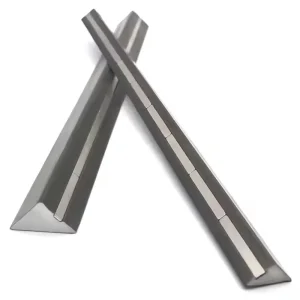
Our factory quality system is certified to ISO 9001:2015, ensuring traceabilty from raw earth extraction to final inspection. For European and North American markets, our products fully comply with RoHS and REACH standards. We also use 3D laser scanners and industrial coordinate measuring machines (CMMs) to ensure that the dimensional tolerances of our pre-embedded insert magnets and magnetic chamfers remain within tight limits (+/- 0.1 mm).
Our commitment to durability means using high-strength structural spring steels and premium grade carbon housings that protect the brittle neodymium core from impact shock, concrete slurry adhesion, and abrasive wear.
In-depth technical answers to help engineers, plant managers, and buyers specify magnetic solutions.
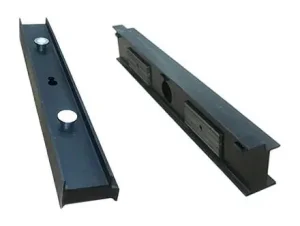
While both terms are sometimes used interchangeably in precast concrete systems, they serve distinct roles. Shuttering magnets generally refer to independent magnetic box systems (ranging from 450kg up to 2500kg pulling force) that fix external steel or plywood edge shuttering profiles onto flat casting beds. Formwork magnets (or integrated magnetic formwork systems) consist of structural shuttering rails with integrated magnetic cores that serve directly as the formwork wall, eliminating the need to construct external wood or steel framing.
Standard N-grade neodymium magnets lose magnetic force above $80^{\circ}\text{C}$. However, by utilizing premium raw material formulations with higher intrinsic coercivity ($H_{cj}$)—such as SH, UH, or EH grades—our customized magnets can work safely in environments up to $150^{\circ}\text{C}$ or even $200^{\circ}\text{C}$. If your process involves autoclave concrete curing, you must specify the maximum working temperature so our engineers can optimize the material recipe.
Maintaining peak vertical holding force requires keeping the contact surface clean. Concrete debris, sand, and scale create air gaps that reduce magnetic flux efficiency. We recommend using a steel brush or scraper to clean the bottom face of the magnet after demobilization, and applying a light protective oil coat. Avoid hammer impacts directly onto the magnetic cores; instead, always use the dedicated lever tool to engage and disengage the push-button mechanism.
Our high holding capacities are achieved through advanced FEA (Finite Element Analysis) simulation. We optimize the spacing between the magnet poles and the steel spacer plates within the carbon housing. This design concentrates the field lines at the interface, generating a strong magnetic circuit that maximizes the physical holding capacity of the NdFeB material.
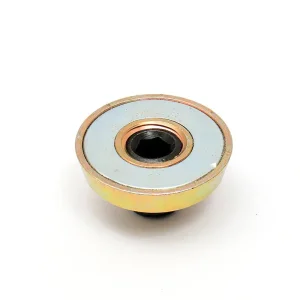
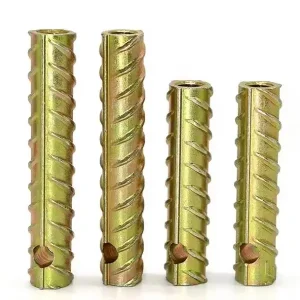
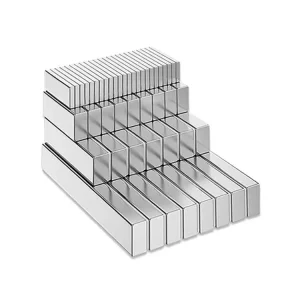
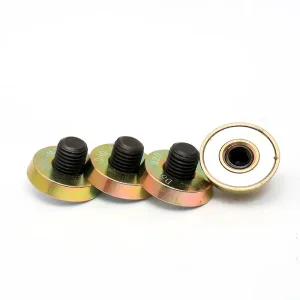
Explore specialized NdFeB bars, custom magnetic chamfers, and threaded components designed for complex assemblies.