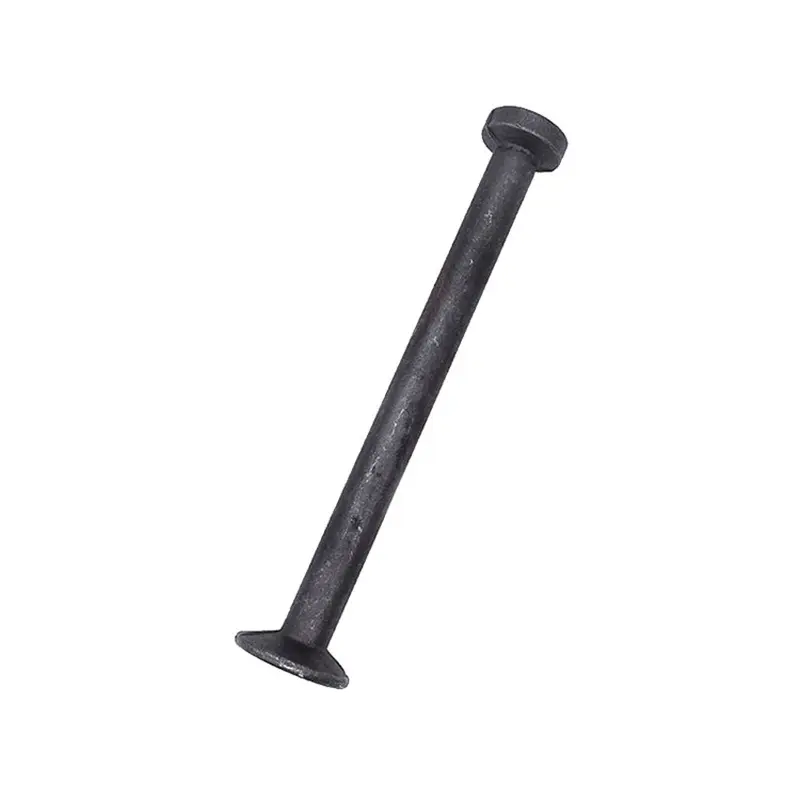
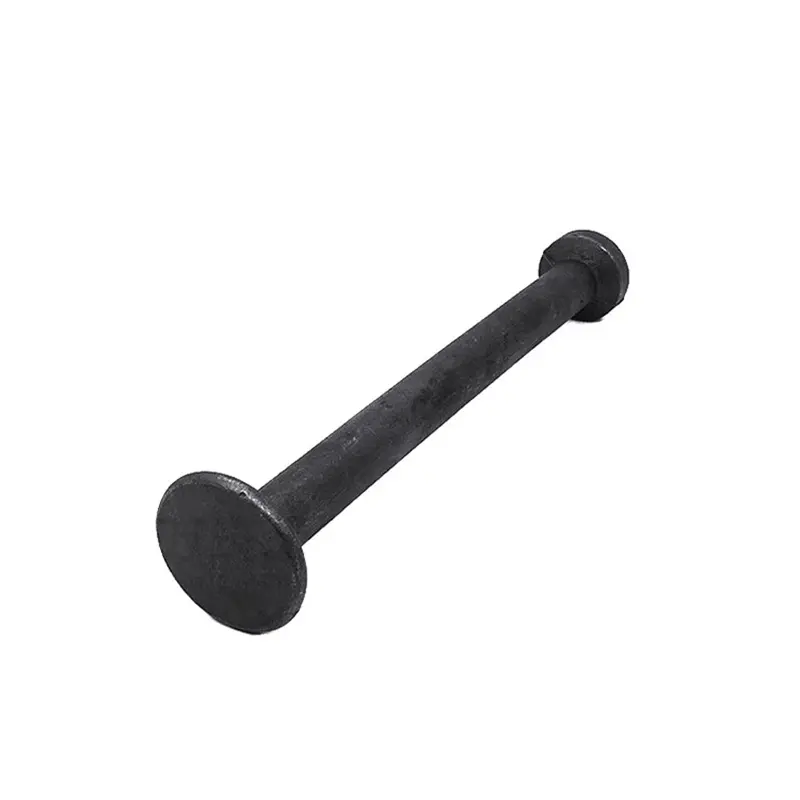
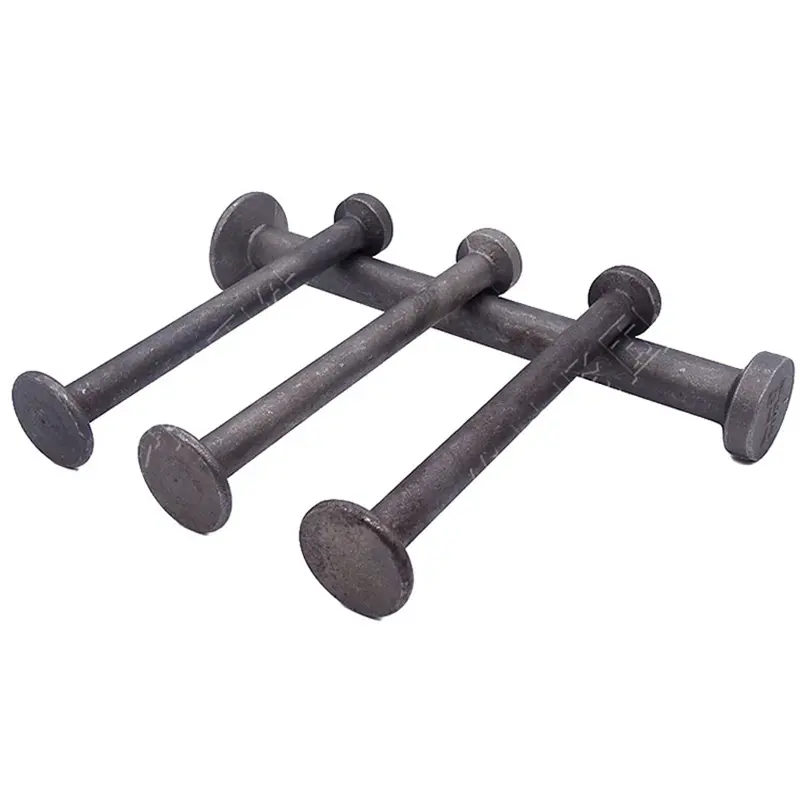
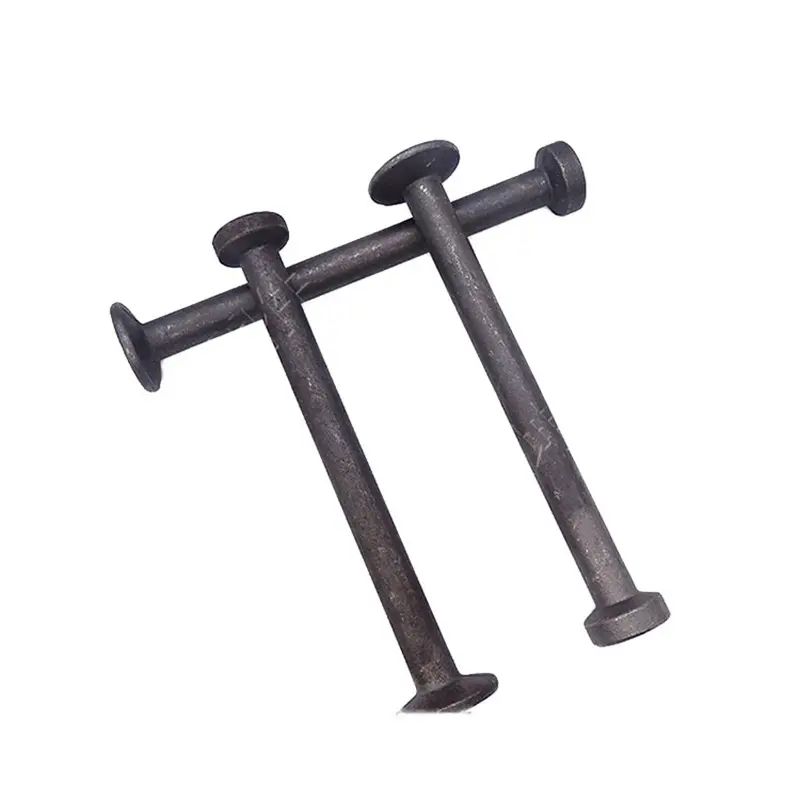
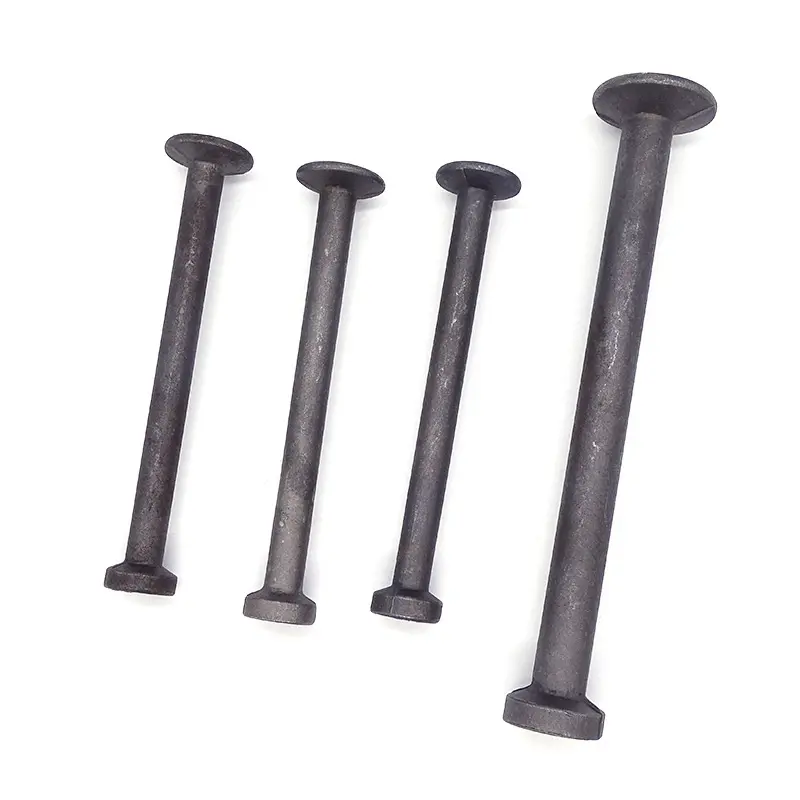
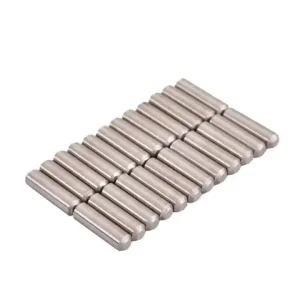
Dog Bone Lifting Pin Anchors, Foot Anchors, and T-Shot Anchors are anchors used for lifting precast concrete units, which are typically forged from high-strength steel and have spherical ends for safe and effective use in lifting and transporting precast concrete units.
Supply capacity: annual supply capacity of 60,000,000 pieces.
Delivery time: 30 days.
Material: St 52-3 or stainless steel 1.4401.
Size range: Suitable for different load requirements from 1.3 tons to 10 tons with corresponding lifting links.
Packing: Small size will be bagged and then boxed, large size will be boxed directly.
Testing and Certification: The production process follows ISO9001 standards for dimensional inspection, tensile testing during production, and tensile testing before shipment.
Dog Bone Lifting Pin Anchors are used to provide safe and reliable lifting points in precast concrete components, allowing for accurate handling and positioning using a crane or similar equipment.
Economical, safe and effective.
Available in a variety of sizes for different load requirements.
Use of rubber notch formers ensures concrete is poured in the correct shape.
Clearly labeled loads on anchors to avoid mismatches or confusion.
Can be tensile tested to ensure safe use.
Conforms to international standards and certifications.
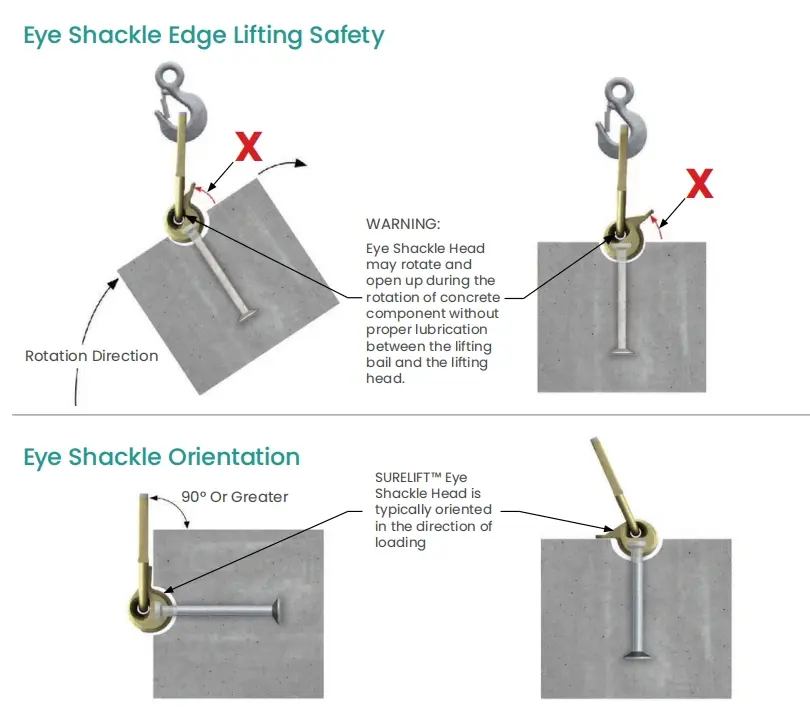
Ensure anchors are properly embedded in the concrete, using rubber notch formers to aid in positioning.
Select the proper anchorage and lifting link for the load requirements.
Avoid making incorrect connections under load or using mismatched lifting links.
Perform periodic tensile tests to ensure the reliability of the anchorage.
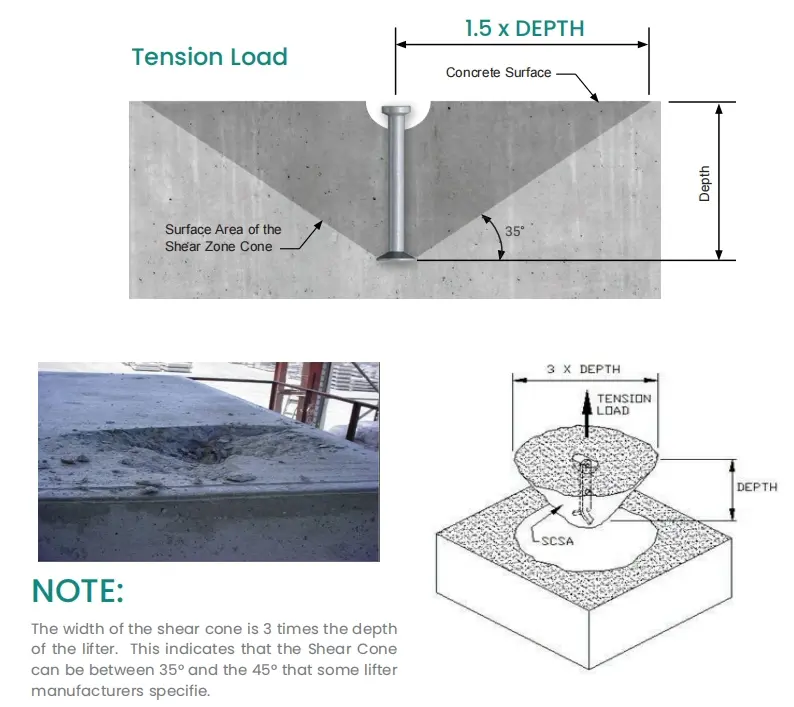
The Shear Cone is the concrete shape left when the insert fails by pulling out of the concrete. The strength of a lift insert is determined by the ‘Shear Cone Surface Area’ (SCSA). Lifter manufacturers consider a 45 degree angle from the surface of the concrete, to the bottom of the lifting insert. Actual failures show the angle is closer to 35 degrees.
Tension Lift is when the lifter is pulled perpendicular to the concrete. To have the full strength for a Tension lift, the minimum edge distance of the concrete must be at least 1.5 times the depth of the insert. This edge can be the distance to a hole, blockout, knockout or the edge of the product. Below is a drawing of a tension shear cone:
Select the appropriate anchors based on the weight and size of the precast concrete member.
Consider the strength of the concrete and the pouring conditions.
Select anchors with an adequate safety factor based on frequency of use and complexity of lifting operations.
Refer to the technical data and certifications provided to ensure compliance with engineering requirements and safety standards.
Frequently Asked Questions (FAQ)
What materials are these lifting anchors made of?
The anchors are typically forged from high-strength steel, specifically St 52-3, or stainless steel 1.4401 to ensure maximum durability and safety.
What load capacities are available?
We offer a size range suitable for various load requirements, typically spanning from 1.3 tons up to 10 tons, matching corresponding lifting links.
How is the quality of the anchors verified?
The production process follows ISO9001 standards. We conduct dimensional inspections, tensile testing during production, and a final tensile test before shipment.
Why are rubber notch formers used during installation?
Rubber notch formers are used to aid in positioning and to ensure that the concrete is poured in the correct shape around the anchor head for a perfect fit with lifting links.
What is the "Shear Cone Surface Area" (SCSA)?
SCSA determines the strength of a lift insert. It refers to the concrete shape that would pull out if the insert fails. A larger SCSA generally indicates higher lifting strength.
How do I choose the correct anchor for my project?
Selection should be based on the weight and size of the precast member, the compressive strength of the concrete at the time of lifting, and the required safety factor for your specific lifting operation.