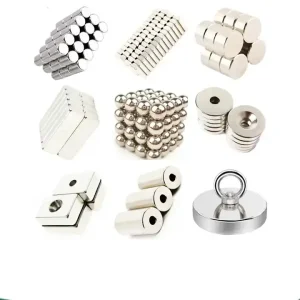
Custom Strong Neodymium Magnet Supplier & Companies

B2B Whitepaper: Engineering High-Coercivity Rare Earth Systems and Modular Magnetic Fixings for Global Infrastructure & Industrial Automation

Precision Engineered Magnetic Systems

Industrial-grade lifting anchors, Halbach arrays, and custom permanent Neodymium assemblies engineered for zero-failure tolerance.
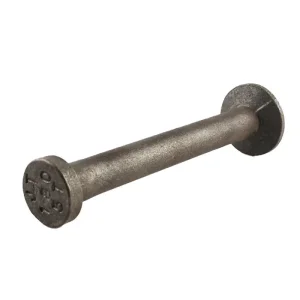
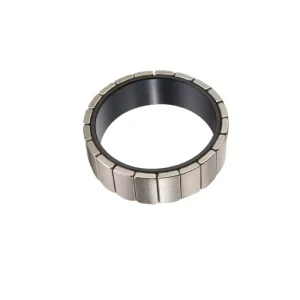
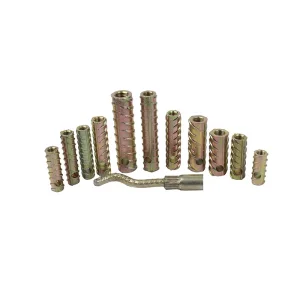
Wholesale Spherical Head Anchor Lifting Anchor Factory

Wholesale Spherical Head Anchor Lifting Anchor Factory, Company

View Specifications
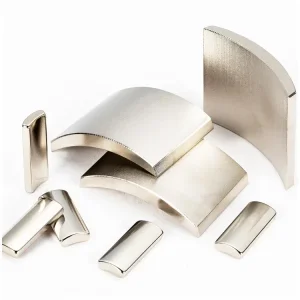
Custom Arc magnet NdFeB Halbach Array Specialized Magnetic Assembly

Custom Arc magnet NdFeB Halbach Array Specialized Magnetic Assembly Factories, Pricelist

View Specifications
Custom Permanent Rare Earth NdFeB Ni Coating Motor Magnet

Custom Permanent Rare Earth NdFeB Ni Coating Motor Custom Magnet for Industrial Manufacturers, Pricelist

View Specifications
Buy Precast Concrete Lifting Clutches Factories

Buy Precast Concrete Lifting Clutches Factories, Company

View Specifications
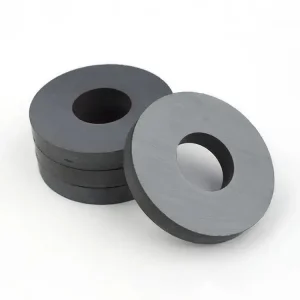
Buy Y25 Y30 Y35 custom Magnetic Ring Ferrite Speaker Magnet

Buy Y25 Y30 Y35 custom Magnetic Ring Ferrite Speaker Magnet blocks for Speaker Factory, Company

View Specifications
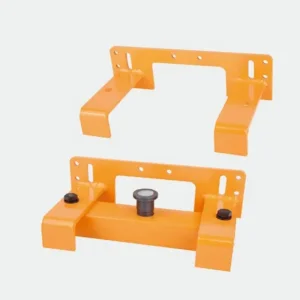
High-Quality Adapters or clamps for shutter magnets

High-Quality Adapters or clamps for shutter magnets Exporters, Products

View Specifications
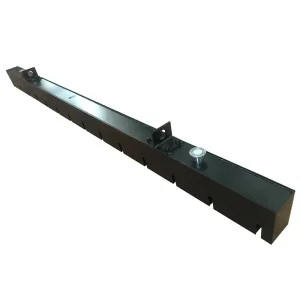
Wholesale Magnet formwork systems for concrete precast factories

Wholesale Magnet formwork systems for concrete precast factories Pricelist, Product

View Specifications
OEM Precast Concrete Anchor Reinforcement Bars

OEM Precast Concrete Anchor Reinforcement Bars with Threaded Lifting Socket Suppliers, Factories

View Specifications

1. Understanding Sintered NdFeB: Properties, Grades, and Engineering Demands

Neodymium Iron Boron (NdFeB) magnets represent the pinnacle of modern material science, offering the highest maximum energy product ($BH_{max}$) of any commercially available permanent magnetic material. In industrial environments, custom strong neodymium magnets are critical components that define the size, performance, and efficiency of electric motors, clean energy systems, robotics, and complex magnetic structural assemblies.

The strength of a neodymium magnet is not merely a function of its physical volume, but is dictated by its grade classification (ranging from N35 up to N55) and its intrinsic magnetic resistance to thermal degradation.

Core Magnetic Properties & Metrics:

  • Remanence ($Br$): Measures the magnetic induction remaining in the magnet when the external magnetic field is reduced to zero. Higher remanence values yield higher flux densities in operational air gaps.
  • Coercivity ($Hcb$ / $Hcj$): The resistance of the magnetic material to demagnetization. Intrinsic coercivity ($Hcj$) is highly temperature-dependent and dictates the maximum thermal thresholds (M, H, SH, UH, EH, AH series) before irreversible losses occur.
  • Maximum Energy Product ($(BH)_{max}$): Denotes the overall magnetic density capacity of the alloy, indicating how much energy can be stored and exerted per unit volume.

N52 to N55 Grade Performance

Utilized in ambient temperature environments requiring maximum magnetic force within constrained spaces. Perfect for micro-actuators, precision sensors, and high-fidelity acoustic drivers.

SH, UH & EH High-Temp Subseries

Formulated with heavy rare earth elements (Dysprosium, Terbium) to operate continuously at temperatures ranging from 150°C to 200°C without significant flux loss. Essential for automotive EV powertrains and wind turbines.

Surface Treatment & Protection

Due to the high iron content in the NdFeB alloy matrix, robust corrosion prevention coatings are mandatory. Options include multi-layer Nickel-Copper-Nickel (Ni-Cu-Ni), vapor-deposited Parylene, chemical-resistant Epoxy, and passivated Zinc.

Global Rare Earth Industry Statistics

Understanding supply dominance, extraction concentration, and manufacturing efficiency indicators.

85%+
Global NdFeB Output from China
<±0.02mm
Precision Machining Tolerance
5300 lbs
Max Precast Shuttering Pull Force
100%
ISO 9001 & IATF 16949 Compliant

2. The Geopolitical and Economic Dynamics of Chinese NdFeB Smelting and Manufacturing

Purchasing professional custom permanent neodymium magnets requires navigating an intricate global supply chain. China hosts the world's most concentrated cluster of rare earth mining, refining, and magnet manufacturing facilities. Cities like Ningbo and Baotou are international hubs that produce over 80% of global industrial neodymium components.

Vertically integrated production lines—running directly from raw oxide separation to vacuum induction melting, jet milling, magnetic field pressing, sintering, and automated coating—give Chinese factories a massive structural lead in efficiency, speed-to-market, and price-to-performance ratio.

Why Global OEMs Source from Premier Chinese Suppliers:

  • Integrated Material Sourcing: Immediate access to critical rare earth metals (Praseodymium-Neodymium PrNd, Dysprosium Dy, Terbium Tb) minimizes price volatility and ensures stable feedstock delivery for large-scale purchase contracts.
  • Highly Specialized Custom Processing: Advanced mechanical capabilities like wire EDM slicing, multi-spindle outer-diameter grinders, and high-speed CNC milling allow for complex custom shapes, including arc segments, countersunk rings, and high-precision Halbach arrays.
  • Unparalleled Supply Scale: Continuous sintering tunnels and high-capacity hydraulic presses enable mass production at fractions of the lead time of Western facilities, allowing global partners to scale up rapidly.
  • State-of-the-Art QA: Utilizing advanced measurement systems like Hysteresisgraphs, ICP-OES elemental analysis, and optical sorting machines ensures high magnetic uniformity and zero out-of-spec deliveries.

3. Localized Applications and Engineering Integration

Neodymium magnets are utilized across diverse industries, with specific mounting, shielding, and structural requirements defined by each local application environment.

Modular & Precast Concrete Infrastructure

One of the most physically demanding applications for permanent magnet assemblies is in the precast concrete industry. High-powered NdFeB systems, known as shuttering magnets or magnetic boxes, are designed to temporarily secure steel molds to vibrating casting tables. With holding forces ranging from 600kg (1320 lbs) to 2500kg (5500 lbs), these systems completely eliminate the need to weld or drill directly into the casting beds, preserving equipment lifespan and increasing concrete molding turnaround speeds.

Electric Drivetrains & Robotics Automation

In modern industrial servo systems and EV drivetrains, sintered Neodymium magnets are formed into precision arc segments and arranged in Halbach array configurations. These arrays focus the magnetic flux on one side while reducing the field on the other to near zero. This optimized pathing yields compact, high-efficiency motors with incredible torque density, enabling precise positioning and minimal power loss in automated robotic arms.

Acoustics & Precision Sensing

High-grade N52 and N54 block and ring magnets provide uniform magnetic flux fields for premium speaker voice coils and industrial Hall-effect sensors. The magnetic stability must remain constant across millions of operating cycles, requiring precise dimensional tolerances down to the micron level to ensure predictable flux readings.

4. About QCM Magnet: Redefining Precast Infrastructure Fixing Solutions

QCM Magnet (Qianci Magnet) stands as a premier technology developer and manufacturer specializing in magnetic fixing solutions for precast concrete production. Over years of development, the company has engineered a comprehensive portfolio of high-efficiency magnetic tools, focusing on formwork magnets, magnetic concrete chamferers, pre-embedded insert magnets, and high-durability shuttering assemblies.

By combining deep rare earth material expertise with structural mechanical engineering, QCM Magnet delivers reusable systems that reduce labor costs, increase production efficiency, and protect the steel platform surface from permanent mechanical damage.

Our Corporate Mission & Delivery Strategy:

Our strategy is built on serving as a leading global manufacturer and strategic partner for the precast concrete industry. We design and deliver custom fixing parts that meet diverse, heavy-duty client requirements, maintaining strict QC standards on every magnetic box, adapter, and casting formwork system. Through collaborative engineering, we work alongside client design teams to tailor magnetic pull forces, casing materials (such as carbon steel and stainless steel), and manual release mechanisms to fit their specific automated production lines.

Frequently Asked Questions

Providing technical clarity on high-strength rare earth magnets, application safety, and custom manufacturing limits.

Q1: What determines the maximum operating temperature of custom Neodymium magnets?
The thermal threshold of a neodymium magnet is determined by its alloy composition. Standard grades (N-series) suffer permanent demagnetization when exposed to temperatures exceeding 80°C (176°F). To counter this, manufacturers alloy the material with Dysprosium (Dy) or Terbium (Tb), creating high-temperature classifications: M (100°C), H (120°C), SH (150°C), UH (180°C), EH (200°C), and AH (220°C). Selecting the correct temperature coefficient is critical to preventing field decay in industrial environments.
Q2: Why are Shuttering Magnets housed in carbon steel or stainless steel casings?
Sintered NdFeB material is mechanically brittle and highly susceptible to impact damage. In construction environments, magnets are subjected to drops, concrete dust buildup, and rough handling. Steel casings act as protective armor, preventing physical fracturing of the core. Additionally, the steel housing forms a complete magnetic circuit, redirecting and concentrating the magnetic flux lines downwards toward the contact surface, significantly increasing the overall holding force.
Q3: How do you verify and measure the pulling force of a high-power magnetic box?
Holding forces are verified using specialized hydraulic tensile testing rigs. The magnetic assembly is activated on a clean, ground steel plate (typically structural steel like Q235, with a thickness of at least 20mm to prevent magnetic saturation). The test rig applies a perpendicular pulling force, and a calibrated load cell records the peak tension required to break the magnetic bond. Surface roughness, paint coatings, and uneven air gaps can reduce this holding capacity.
Q4: What coating options are recommended for magnets exposed to moisture and outdoor conditions?
For standard dry industrial environments, a multi-layer Ni-Cu-Ni (Nickel-Copper-Nickel) electroplated coating is sufficient. However, for outdoor construction, humid concrete casting beds, or marine environments, advanced protection is required. Black or Grey Epoxy coatings offer superior chemical and moisture resistance. For maximum defense, specialized coatings like Everlube, Teflon, or multi-layer Zinc plating with an outer passivated layer are recommended to prevent internal oxidation.
Q5: What are the differences between Neodymium (NdFeB) and Samarium Cobalt (SmCo) magnets?
Neodymium magnets offer superior maximum energy products (up to 55 MGOe) and higher mechanical strength at room temperature, making them more cost-effective for general industrial applications. Samarium Cobalt (SmCo) magnets have a lower energy product (up to 33 MGOe) but offer outstanding thermal stability (operating up to 350°C) and excellent corrosion resistance without coatings. SmCo is typically selected for demanding aerospace, military, and extreme high-temperature applications.
Q6: What is a Halbach Array, and how does it optimize custom motor designs?
A Halbach Array is a spatial arrangement of permanent magnets that rotates the direction of magnetization in a repeating pattern. This arrangement focuses the magnetic flux on one side of the array while reducing the field on the opposite side to near zero. In motor design, this concentrated flux field allows engineers to build coreless rotors with minimal weight, reducing eddy current losses, eliminating heavy back-iron supports, and delivering high torque density.
Q7: How are high-strength industrial magnets safely shipped by air?
Air cargo shipping of magnetic materials is governed by IATA Packing Instruction 953. To prevent interference with aircraft navigation instruments, the magnetic field must measure less than 0.00525 gauss at a distance of 4.6 meters (15 feet) from the package. To meet this requirement, custom magnetic shielding is constructed inside the shipping containers using sheets of high-permeability steel (such as iron or Mu-metal) to contain and loop the magnetic field within the packaging.
Q8: How does the thickness of the steel plate affect the holding force of a shuttering magnet?
The holding force of a shuttering magnet depends on the steel plate being thick enough to absorb and route all the magnetic flux lines. If the steel plate is too thin, it becomes magnetically saturated, allowing flux to escape out the back. This leakage limits the maximum holding force. For example, a 2100kg magnetic box requires a steel bed plate thickness of at least 20mm to achieve its rated holding force.

Heavy-Duty Construction & Assembly Components

Premium N54/N55 rectangular block magnets, high-capacity shuttering systems, and custom pot magnets for structural fabrication.
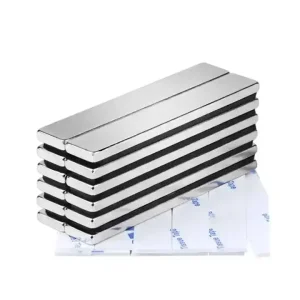
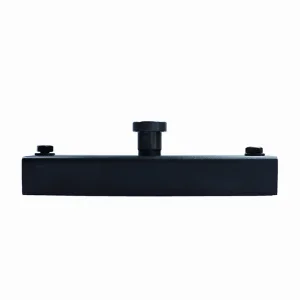
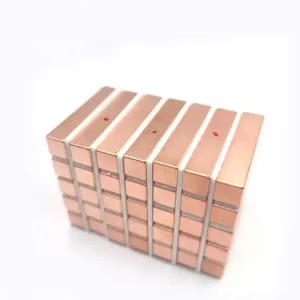
High-Quality Premium Neodymium N54/N55 Rectangular Block Magnets

High-Quality Premium Neodymium N54/N55 Rectangular Block Magnets | High-Strength Rare Earth Magnets Exporter, Companies

View Specifications
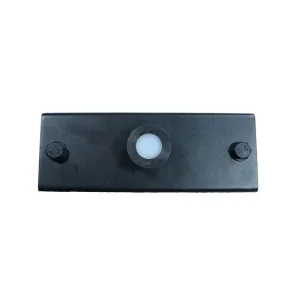
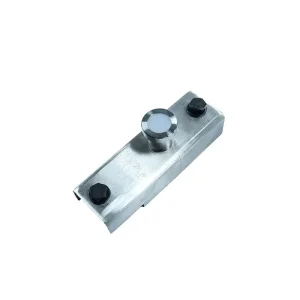
Custom 2000 lbs Carbon Steel Precast Concrete Shuttering Magnet Quotes

Custom 2000 lbs Carbon Steel Precast Concrete Shuttering Magnet Quotes, Exporter

View Specifications
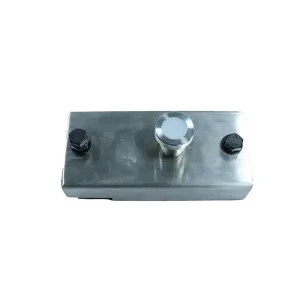
OEM 4000 lbs Carbon Steel precast concrete shuttering magnet

OEM 4000 lbs Carbon Steel precast concrete shuttering magnet Manufacturer, Company

View Specifications
China Embedded PVC Pipe Fixed Magnet Factory

China Embedded PVC Pipe Fixed Magnet Factory, Factories

View Specifications
OEM 2200 lbs precast concrete stepping shuttering magnet

OEM 2200 lbs precast concrete stepping shuttering magnet Factory, Products

View Specifications
China High Temperature Resistance Smco Magnet Custom Block

China High Temperature Resistance Smco Magnet Custom Block Coating Magnet Product, Products

View Specifications
China 1000 lbs steel Precast Concrete Shuttering Magnet

China 1000 lbs steel Precast Concrete Shuttering Magnet Manufacturers, Exporters

View Specifications
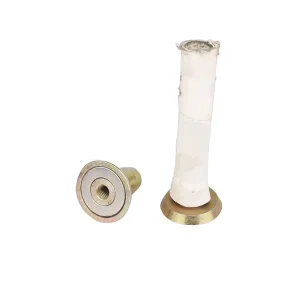
Buy Strong Neodymium Countersunk Pot Magnet Supplier

Buy Strong Neodymium Countersunk Pot Magnet Supplier, Factory

View Specifications

Industry News & Application Case Studies

Stay updated with the latest technological developments in magnetic fixing and global industry exhibitions.
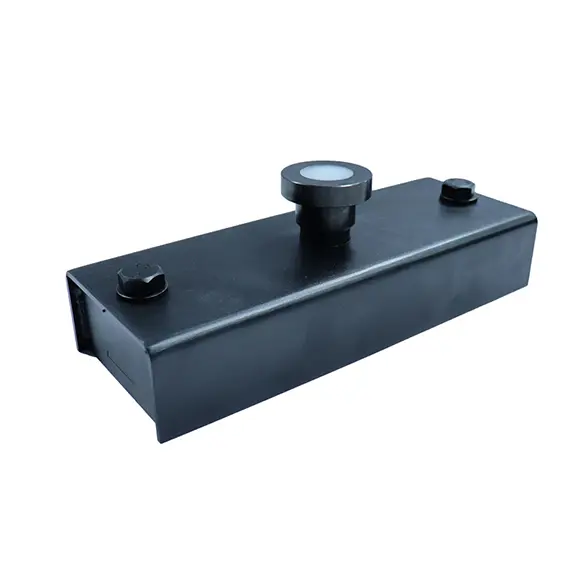
What is the difference between Formwork & Shuttering Magnets

What is the difference between Formwork & Shuttering Magnets?

In precast concrete production, shuttering magnets are used to temporarily secure side profiles to casting beds, while formwork systems integrate the magnet directly into structural panels. Discover how choosing the right system can optimize your casting line.

Read Full Article

QCM Set to Redefine Construction Efficiency at UK Construction Week 2025

QCM Set to Redefine Construction Efficiency at UK Construction Week 2025

From May 7th to 9th, QCM Magnet will present its latest magnetic fixing solutions for precast concrete plants at the UK Construction Week in London, showcasing new ways to reduce setup labor costs.

Read Full Article