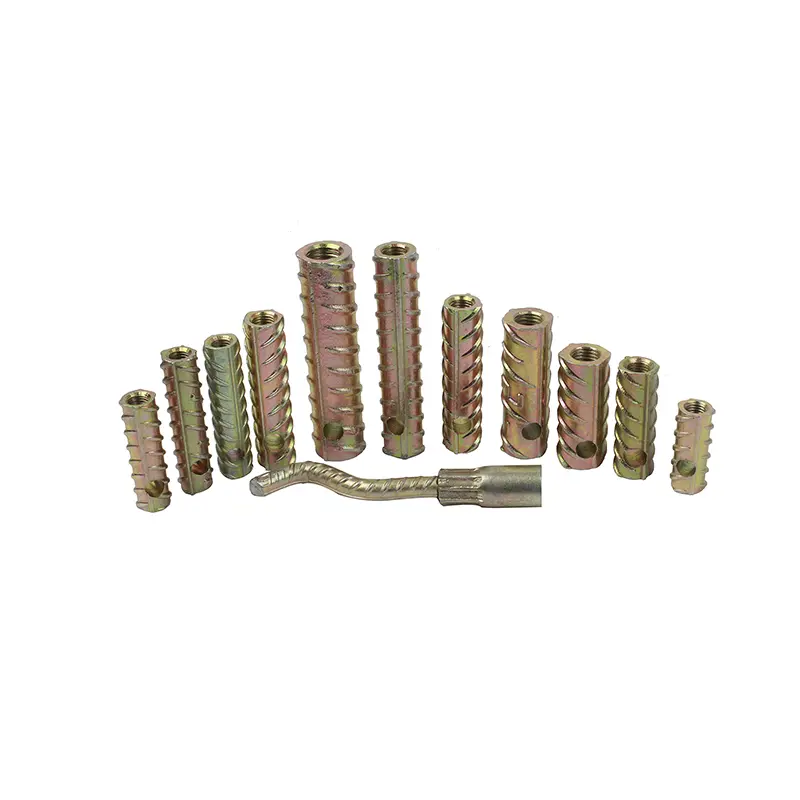
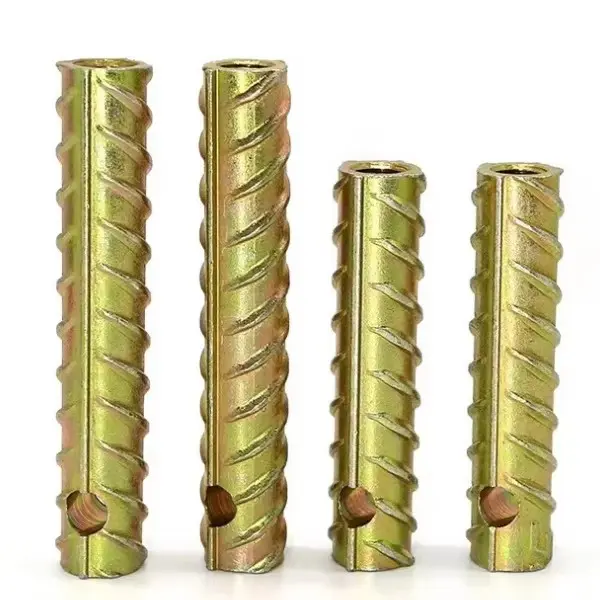
Concrete accessories, specifically reinforcement bars and threaded lifting sockets, are specialized devices used in the precast concrete industry for the safe and efficient lifting and handling of concrete elements. These sockets play a crucial role in the construction process, particularly when working with precast components such as walls, slabs, and beams.
Overview of Threaded Lifting Sockets
Threaded lifting sockets are specifically designed to be embedded in concrete elements during the manufacturing process. They offer a secure attachment point for lifting equipment, facilitating the safe transport and placement of heavy concrete units.
✓
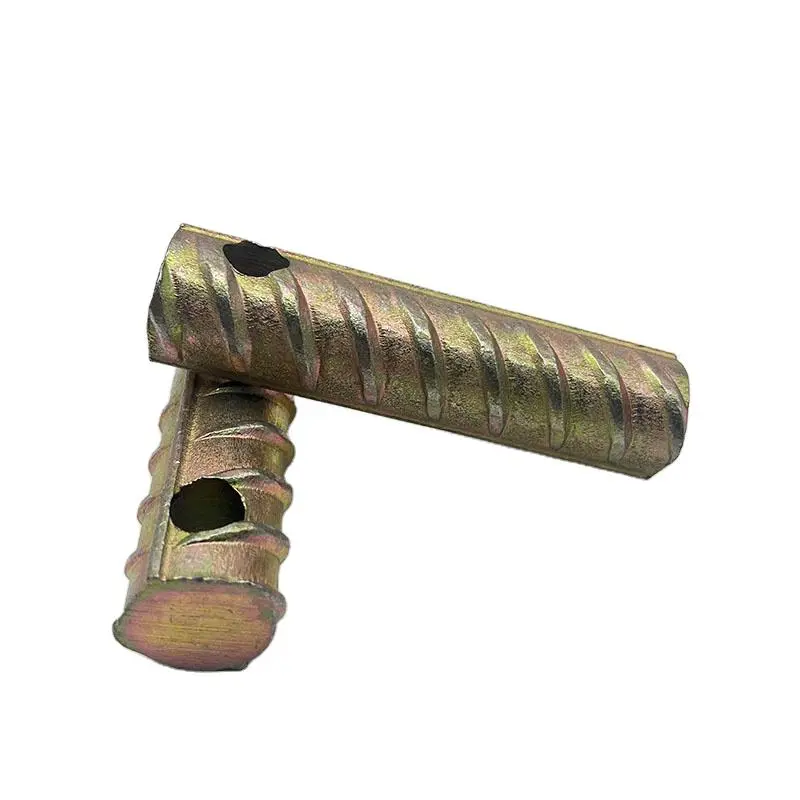
Material Construction: Made from high-grade reinforcement bars, these sockets are designed to withstand significant loads and harsh environmental conditions. They can also be galvanized for enhanced corrosion resistance.
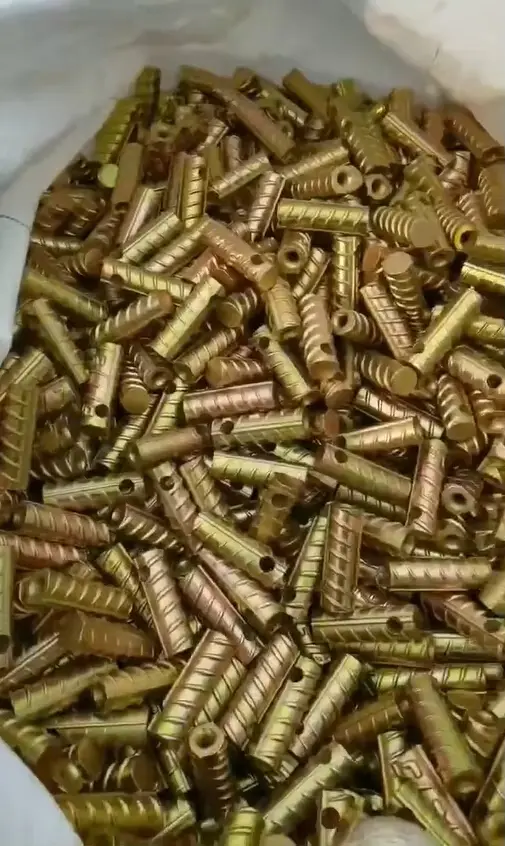
Threaded lifting socket made from reinforcement bars
✓
Load Capacity: Available in a range of sizes and load capacities, typically from 500 kg to 12,500 kg. Their specific design enables them to handle various lifting scenarios, including angled loads and straight pulls.
✓
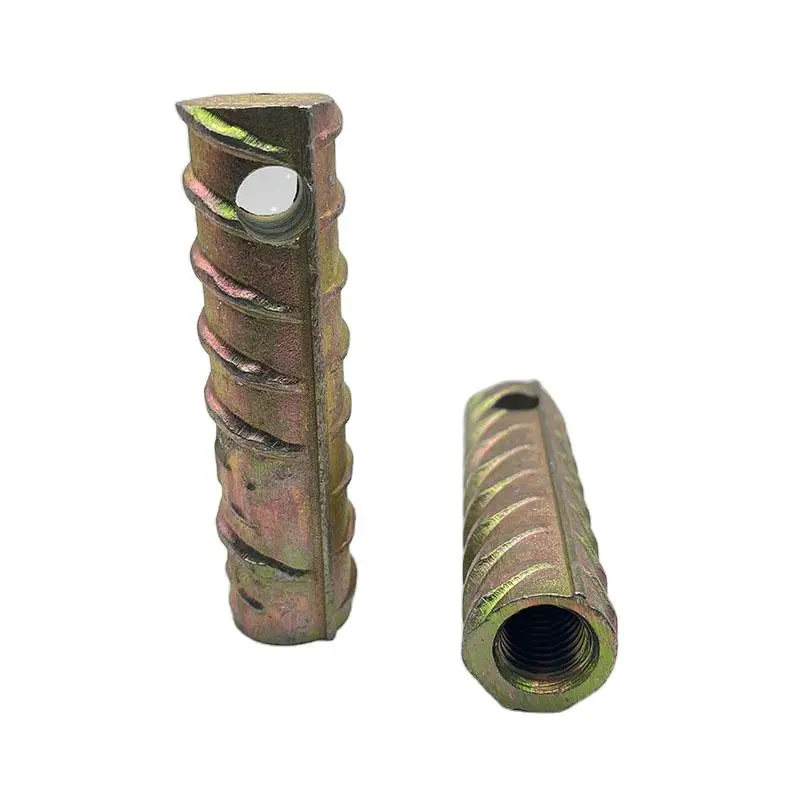
Design Variants: The sockets can accommodate various thread types (e.g., M-thread or Rd-thread) and tubular designs. The tube's cross-hole design facilitates easy insertion of reinforcement bars, effectively transferring loads into the concrete.
Industrial Applications
★
Precast Concrete Elements: Ideal for lifting precast walls, slabs, beams, and other structural components.
★
Construction Efficiency: By integrating these sockets into precast elements, construction teams can streamline the lifting process, reducing labor time and enhancing safety during handling.
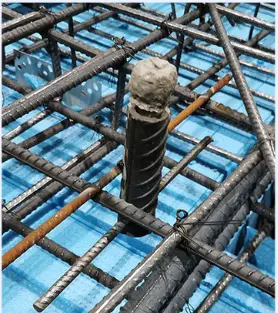
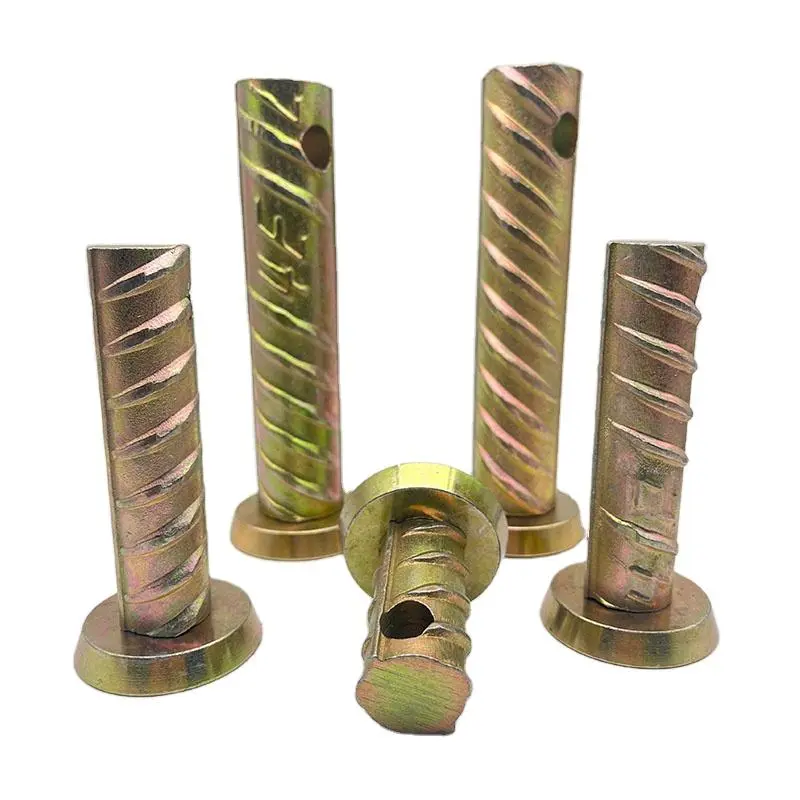
Application of reinforcement bars thread lifting socket
Installation and Use
1. Casting into Concrete: The socket is embedded within the concrete during the casting process. A reinforcement bar is threaded through the socket to secure it firmly within the element.
2. Lifting Operations: Once the concrete has cured, lifting equipment—such as cranes or hoists—can be securely attached to the socket for safe handling.
3. Safety Considerations: Proper calculations regarding load distribution and reinforcement are essential to ensure safe lifting practices. The use of multiple sockets requires specific spacing to maintain structural integrity under load.
Concrete accessories, such as reinforcement bars and threaded lifting sockets, play a crucial role in modern precast concrete construction, providing reliable lifting points that enhance safety and efficiency during the transportation and installation of heavy concrete elements.
Frequently Asked Questions (FAQ)
What are threaded lifting sockets used for?
They are specialized devices embedded in precast concrete elements like walls, slabs, and beams to provide secure attachment points for cranes and lifting equipment.
What is the typical load capacity of these sockets?
Load capacities generally range from 500 kg to 12,500 kg, depending on the size and design of the socket.
Can these sockets resist corrosion?
Yes, many lifting sockets are made with galvanized finishes to provide enhanced corrosion resistance for harsh environments.
What types of threads are available?
Common thread types include M-threads (Metric) and Rd-threads (Round), designed to accommodate different types of lifting bolts and hardware.
How are the sockets secured within the concrete?
The sockets are cast directly into the concrete, and a reinforcement bar is often passed through a cross-hole in the socket to ensure the load is properly transferred to the structural element.
Is special spacing required for multiple sockets?
Yes, specific spacing and load distribution calculations are necessary to maintain structural integrity and ensure the safety of the lifting operation.