
Top Neodymium Magnet Manufacturers for Global Buyers

Time:2026-09-08 Author:Sienna
0%

Choosing reliable neodymium magnet manufacturers requires more than comparing prices on a supplier website. Global buyers need consistent magnetic performance, accurate dimensions, safe coatings, and dependable delivery. This guide examines leading manufacturers serving industrial, commercial, and specialized applications.

Experienced buyers often request material grades, pull-force data, temperature ratings, and coating specifications before placing an order. They may also review ISO certifications, quality-control procedures, factory capabilities, and independent test reports. These details reveal how a manufacturer handles real production pressure. A clean sample may look excellent, yet batch consistency matters more.

Neodymium Magnet Magnets can support motors, sensors, speakers, lifting systems, and renewable-energy equipment. However, strength alone does not determine suitability. A magnet with the wrong grade or coating may corrode, weaken, or fail during operation. Temperature exposure matters. So does physical impact.

This overview focuses on manufacturers with visible technical expertise, transparent communication, and established export experience. It considers custom sizing, packaging, lead times, inspection support, and responsible compliance practices. Buyers should still verify current certifications and specifications directly. No supplier is perfect. That deserves attention.

Manufacturing capacity can change. Delivery promises can change too. By comparing evidence instead of relying on marketing language, purchasing teams can reduce risk and make better-informed decisions. The goal is practical guidance for selecting a capable partner, not simply identifying the lowest quotation.
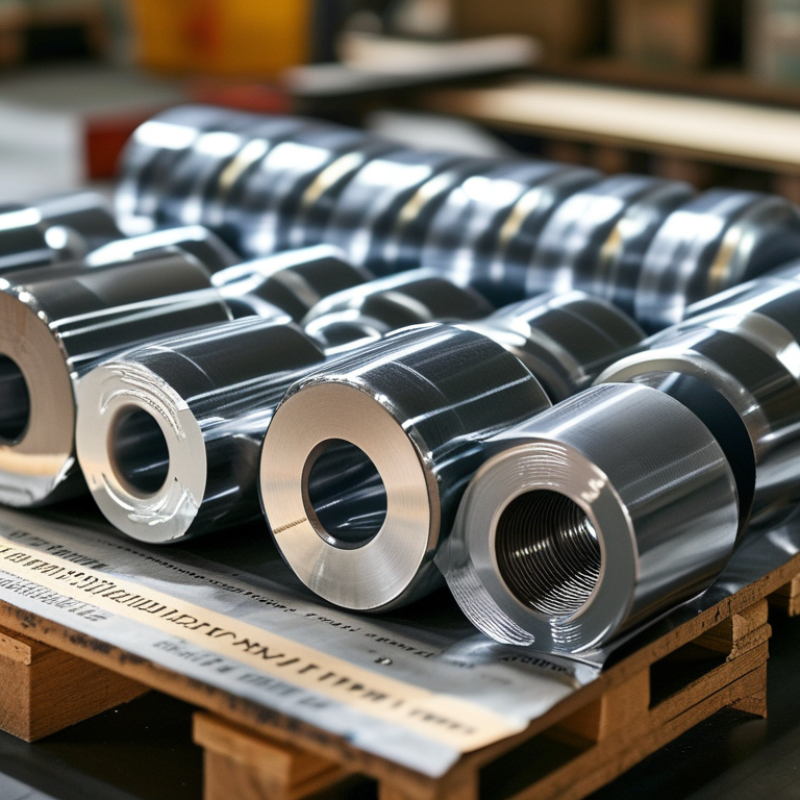
Top Neodymium Magnet Manufacturers for Global Buyers

What Are Neodymium Magnets and Why Are They Important?

Neodymium magnets are permanent magnets made mainly from neodymium, iron, and boron. Their Nd-Fe-B structure produces exceptional magnetic strength in a compact volume. A small disc can hold a steel fixture firmly, even when space is limited. This strength explains their use in motors, sensors, speakers, medical equipment, and automated tools. They create no energy. They provide a concentrated magnetic field.

Their importance comes from efficiency, size reduction, and reliable positioning. Electric motors can become lighter when strong magnets deliver torque from a smaller assembly. Sensors use predictable magnetic fields to detect movement, speed, or opening positions. In production, buyers should check grade, dimensions, magnetization direction, coating, and operating temperature. A listed surface strength is not enough. Actual performance changes with air gaps, heat, steel geometry, and assembly pressure. That detail is often missed.

Manufacturers serving global buyers should provide material certificates, inspection records, and clear tolerance data. They should also explain whether nickel, epoxy, or another coating suits the working environment. Neodymium magnets are brittle, despite their impressive pull. A dropped magnet may chip, while excessive heat can permanently weaken it. During evaluation, sample testing is more dependable than relying on a catalogue photograph. I would still question every attractive specification. Real installations are rarely perfect.

How Neodymium Magnet Manufacturers Differ in Production Capability

Top Neodymium Magnet Manufacturers for Global Buyers

How Neodymium Magnet Manufacturers Differ in Production Capability

Production capability involves more than having large presses. A reliable manufacturer controls powder preparation, sintering, machining, coating, magnetizing, and final inspection. The International Energy Agency’s Global Critical Minerals Outlook 2024 reported that China supplied about 94% of global permanent magnet production in 2023. This concentration makes supplier qualification especially important for international buyers.

Capacity is not output. A factory may advertise high annual tonnage, yet struggle with tight-tolerance rings or large block magnets. Buyers should review furnace capacity, batch consistency, and equipment utilization. A practical audit should examine oxygen control during powder processing, dimensional records, coating thickness, and magnetic test data. Testing matters. Measurements should include remanence, coercivity, maximum energy product, and temperature performance. ISO 9001 certification supports process discipline, but it does not replace production evidence. The U.S. Geological Survey’s Mineral Commodity Summaries 2025 estimated global rare-earth mine production at about 390,000 metric tons of rare-earth-oxide equivalent in 2024, with China contributing roughly 270,000 tons. Material access therefore affects delivery stability and cost.

Traceability separates mature operations from temporary capacity. Lot numbers should connect raw materials, furnace records, inspection results, and shipment documents. Some suppliers still rely heavily on manual checks. That creates avoidable variation. Buyers should also request rejection rates, corrective-action records, and sample approvals before placing volume orders. No system is perfect. Supplier claims deserve verification, especially when lead times look unusually attractive.

Top Neodymium Magnet Manufacturers for Global Buyers

Choosing a neodymium magnet manufacturer for global supply requires more than comparing prices. Experienced buyers examine magnetic grade, dimensions, coating, tolerance, and production capacity. A reliable supplier should provide clear technical data, inspection records, and consistent sample results.

Ask for evidence. Request test reports showing pull force, surface treatment, and temperature performance. For industrial orders, confirm whether the factory uses controlled sintering, precision grinding, and batch-level inspection. A small variation in magnet size can affect assembly alignment, noise, or holding strength. Packaging also matters because magnets can chip during long-distance transport.

Manufacturers serving international buyers should understand export documentation, labeling, and regional product requirements. They should explain lead times honestly, including delays caused by raw material changes or capacity limits. I have found that direct technical communication often reveals more than a polished catalog. Can the supplier answer questions about corrosion resistance, magnetization direction, and replacement procedures?

Do not judge quality from one perfect sample. Repeat testing matters. Buyers should compare several batches and review performance after coating exposure or heat cycling. No supplier is flawless, and a manufacturer that admits limits may be more trustworthy than one promising everything. Define acceptance standards before placing a large order, then keep records for future audits.

Quality Standards and Certifications for Neodymium Magnets

Top Neodymium Magnet Manufacturers for Global Buyers

Quality Standards and Certifications for Neodymium Magnets

Reliable neodymium magnet suppliers show more than a polished certificate. They provide batch records, inspection results, and clear material grades. ISO 9001 supports controlled production, but it does not guarantee magnetic strength. Buyers should request remanence, coercivity, maximum energy product, and temperature-coefficient data.

IEC 60404-8-1 helps classify permanent magnet materials and their technical properties. RoHS and REACH declarations address restricted substances and chemical compliance. For automotive applications, IATF 16949 can indicate stronger process controls. Still, certification scope matters. A factory may hold ISO 9001 for one site, not every production line.

The supply chain also deserves attention. The USGS Mineral Commodity Summaries 2025 reported about 390,000 metric tons of rare-earth oxide equivalent production in 2024. China contributed approximately 270,000 metric tons. This concentration makes traceability and contingency planning important for global buyers. Certificates alone cannot reveal every supply risk. That is an uncomfortable gap.

Tips: Ask for a recent certificate, issuing body, scope, and expiration date. Match the certificate address with the manufacturing site. Request a sample batch report with measured values, not typical values. Test coating thickness, pull force, and corrosion resistance independently when failure costs are high. A magnetic curve on paper is useful, but real samples may behave differently.

How to Choose the Right Manufacturer for Your Requirements

Top Neodymium Magnet Manufacturers for Global Buyers

Choosing the right neodymium magnet manufacturer requires more than comparing prices. Start with your operating conditions. Check grade, magnetic strength, working temperature, coating, shape, and permitted tolerances. A magnet inside a motor may face heat, vibration, and repeated cycling. A cheaper grade can lose performance quickly.

The International Energy Agency reported in its Global Critical Minerals Outlook 2024 that China supplied about 91% of refined magnet rare earths and 94% of permanent magnets. This concentration makes supply-chain resilience important. Ask manufacturers for material traceability, production locations, inspection records, and backup capacity. Request batch-level test data, not only a polished product sheet. Look for measurements of remanence, coercivity, dimensional accuracy, and temperature resistance.

Quality systems also deserve careful review. ISO 9001 certification can indicate controlled processes, but it does not prove every magnet meets your design needs. Require samples from the intended production line. Test them under realistic conditions, including heat, salt spray, and mechanical stress. Confirm lead times in writing, especially for custom tooling. A low quotation can still be the wrong answer. I have seen procurement decisions focus on unit cost while ignoring coating failures and delayed replacements. That lesson remains uncomfortable. Review communication speed, engineering support, corrective-action records, and warranty terms before signing a contract. A reliable manufacturer should explain limitations clearly, even when the answer is inconvenient.

Top Neodymium Magnet Manufacturers for Global Buyers - How to Choose the Right Manufacturer for Your Requirements
Selection Dimension What Global Buyers Should Define Typical Neodymium Magnet Data Recommended Manufacturer Verification
Magnet Grade Required magnetic strength and operating conditions Common grades include N35, N38, N40, N42, N45, N48, N50 and N52. Higher grades generally provide greater maximum energy product, but may require tighter cost and temperature control. Request a material certificate showing remanence, coercivity and maximum energy product. Confirm that the tested values meet the applicable grade specification.
Temperature Resistance Continuous and peak operating temperature of the application Standard neodymium magnets are commonly used near room temperature. High-temperature grades may be selected for approximately 100°C to 200°C service, depending on grade and design. Ask for the maximum recommended working temperature, reversible temperature coefficient and irreversible loss data. Do not select a grade using temperature rating alone.
Magnet Shape Geometry, installation method and available space Frequently supplied forms include discs, blocks, rings, arcs, countersunk magnets and custom assemblies. Complex shapes may require specialized tooling or multi-step machining. Provide a dimensioned drawing or 3D file. Confirm magnetization direction, datum references, corner radii, holes, slots and assembly tolerances before production.
Dimensional Tolerance Fit, air gap, balance and assembly accuracy Pressed and sintered magnets often require defined dimensional tolerances; tighter tolerances can require grinding, wire cutting or additional inspection and may increase cost. Specify tolerances for every critical dimension. Request an inspection report using calibrated gauges, coordinate measuring equipment or other agreed measurement methods.
Magnetic Tolerance Flux consistency, pull force or field strength Magnetic performance varies with grade, size, magnetization direction, measurement position and test equipment. Matched sets may be needed for motors, sensors and magnetic couplings. Define the test method, pole orientation, measurement distance, temperature and acceptable variation. Request batch-level magnetic test records rather than relying only on nominal grade.
Surface Coating Corrosion protection and environmental exposure Common finishes include nickel-based multilayer coatings, epoxy coatings, zinc coatings and other protective systems. Coating selection depends on humidity, salt spray, chemicals and wear. Confirm coating thickness, adhesion, appearance requirements and corrosion-test method. For demanding environments, request test evidence relevant to the actual application.
Corrosion Performance Indoor, outdoor, marine or chemically exposed use Neodymium magnets are susceptible to corrosion if the protective coating is damaged or unsuitable. Exposed edges, cracks and machining marks can increase corrosion risk. Review storage, handling and packaging procedures. Confirm whether the supplier performs visual inspection, coating inspection and environmental testing on production batches.
Magnetization Pattern Single-pole, multipole, axial, diametral or custom magnetic orientation Axial and diametral magnetization are common for basic shapes. Multipole and radial patterns are used in selected motors, encoders, sensors and magnetic assemblies. Include a magnetization diagram in the purchase specification. Require polarity marking or an approved first-article sample for non-standard orientations.
Quality Management Process consistency, traceability and corrective action A suitable supplier should maintain documented incoming inspection, process controls, final inspection, nonconformance handling and batch traceability. Request current quality-system certification where relevant, a sample inspection plan, lot identification method and documented corrective-action process.
Testing Capability Proof that material and finished parts meet specifications Relevant checks may include dimensions, surface condition, coating integrity, magnetic properties, temperature behavior and packaging condition. Ask for sample test reports and clarify whether testing is performed internally or by an independent laboratory. Ensure instruments have suitable calibration records.
Prototype Support Speed and flexibility during design validation Prototype orders may use existing tooling, rapid machining or small-batch production. Prototype cost, lead time and minimum order quantity vary by geometry and tolerance. Compare sample lead time, prototype pricing, engineering communication and the supplier’s ability to revise drawings without losing revision control.
Production Capacity Ability to meet forecast volume and delivery schedule Capacity depends on pressing, sintering, machining, coating, magnetizing and inspection resources. A supplier may subcontract some operations, affecting control and lead time. Confirm monthly capacity for the specific product family, bottleneck processes, backup equipment, subcontracted operations and capacity-allocation policy.
Supply-Chain Traceability Visibility of raw materials, batches and production stages Traceability can link the finished part to material batch, production date, coating lot, inspection records and shipment documentation. Request a sample certificate of conformity and confirm that lot numbers remain identifiable from production through delivery.
Export Packaging Safe international transport and compliance with carrier rules Strong magnetic fields can interfere with transport systems and sensitive equipment. Packaging may require shielding, separation, cushioning and clear handling documentation. Confirm packaging design, magnetic-field checks, carton labeling, palletization, moisture protection and compliance with the selected carrier’s shipping requirements.
Commercial Terms Total landed cost, payment risk and delivery responsibility The purchase price is only one component of total cost. Tooling, inspection, coating, packaging, freight, duties, taxes, rejects and replacement terms may also apply. Compare quotations using the same drawings, quantities, Incoterms, inspection scope, packaging standard, currency, lead time and warranty conditions.
Sustainability and Compliance Customer, market and regulatory obligations Buyers may need declarations concerning restricted substances, responsible sourcing, environmental management, waste handling and applicable product regulations. Request current declarations and supporting documentation relevant to the destination market. Verify that documents apply to the supplied material and coating system.
Note: The figures and ranges above are general purchasing references for neodymium magnets, not performance claims for any specific manufacturer. Final requirements should be confirmed through an approved drawing, specification, sample validation and batch inspection plan.

FAQS

: What are neodymium magnets made from?

: They mainly contain neodymium, iron, and boron. Their compact structure creates a strong, concentrated magnetic field. They produce no energy. A small disc can hold a steel fixture firmly.

Why are neodymium magnets important?

They help reduce equipment size and weight. Strong magnets can deliver useful torque inside smaller motors. They also support movement detection, speed sensing, and position control. The benefit is practical, not magical.

Where are neodymium magnets commonly used?

They appear in motors, sensors, speakers, medical equipment, and automated tools. A sensor may detect whether a door is open. A motor may become lighter with a smaller magnetic assembly. Actual results depend on the full design.

What should buyers check before ordering magnets?

Check the grade, dimensions, magnetization direction, coating, and operating temperature. Do not rely only on listed surface strength. An air gap can reduce holding force sharply. Steel shape and assembly pressure also matter.

How can buyers evaluate a manufacturer’s production capability?

Review powder preparation, sintering, machining, coating, magnetizing, and final inspection. Ask about furnace capacity and batch consistency. Large annual capacity does not guarantee precise rings or blocks. Capacity is not output.

What testing records should a reliable supplier provide?

Request magnetic test data, dimensional records, coating measurements, and material certificates. Useful magnetic measurements include remanence, coercivity, energy product, and temperature performance. Lot numbers should connect materials, furnace records, inspections, and shipment documents. Traceability matters.

Why is sample testing better than catalogue photographs?

Samples reveal real dimensions, surface condition, coating quality, and magnetic performance. Photographs cannot show heat damage or a small machining error. Test the magnet in its intended assembly. Real installations are rarely perfect.

What safety and handling issues should buyers consider?

Neodymium magnets are brittle, despite their strong pull. A dropped magnet may chip or crack. Excessive heat can permanently weaken the magnet. Use suitable coatings for the working environment. Claims still need verification.

Conclusion

Neodymium magnets are among the strongest permanent magnets available, offering high magnetic strength in a compact size. They are widely used in motors, sensors, renewable energy equipment, medical devices, automation systems, and consumer products. The term Neodymium Magnet Magnets reflects the growing demand for reliable magnetic solutions across global industries, where performance, durability, and consistent supply are essential.

Leading manufacturers differ in their ability to control raw materials, magnetic grades, production volume, coating options, machining precision, and quality testing. Buyers should evaluate whether a supplier can meet technical specifications, maintain stable lead times, and provide suitable certifications and inspection records. Important quality considerations may include dimensional accuracy, magnetic performance, corrosion resistance, temperature stability, and compliance with applicable international standards. Choosing the right manufacturer requires comparing production capabilities, customization services, communication, packaging, logistics, and after-sales support. A well-qualified supplier should offer transparent documentation and dependable quality control, helping global buyers reduce risk and achieve reliable long-term performance.

Sienna

Sienna

Sienna is a skilled marketing professional with a deep expertise in our company’s core products and services. With a passion for innovation and detail, she plays a pivotal role in crafting insightful blog posts that not only highlight the unique features of our offerings but also provide valuable......