Super Strong Magnets can look simple: a small silver disc, a smooth block, or a ring that snaps sharply onto steel. Choosing one well takes more than comparing advertised pull force. The right magnet depends on its shape, grade, coating, working temperature, and the surface it must hold. A strong magnet can still disappoint when an air gap, thin steel, or sideways load changes the result.
Dr. Masato Sagawa is a materials scientist known for his work on neodymium-iron-boron magnets. A practical paraphrase of the lesson behind that work is: “Choose a magnet for its operating conditions, not its headline strength.” This is a paraphrase, not a verbatim quotation. Keep that distinction clear. In the tips ahead, we’ll look at how to compare grades, dimensions, temperature ratings, and corrosion protection. We’ll also examine how manufacturers test holding force—and why test conditions matter.
Picture a magnet holding a bracket through painted steel. Its catalog rating may assume direct contact with a thick, flat steel plate. Real installations are messier. There may be a coating, vibration, or a small gap. Those details count. So does safe handling: powerful magnets can pinch fingers or chip if they collide. Check product specifications, use suitable protective practices, and test the intended setup carefully. Even experienced buyers can overfocus on the biggest number. That’s an easy mistake. This guide offers a practical way to compare Super Strong Magnets, ask better supplier questions, and choose with fewer surprises.
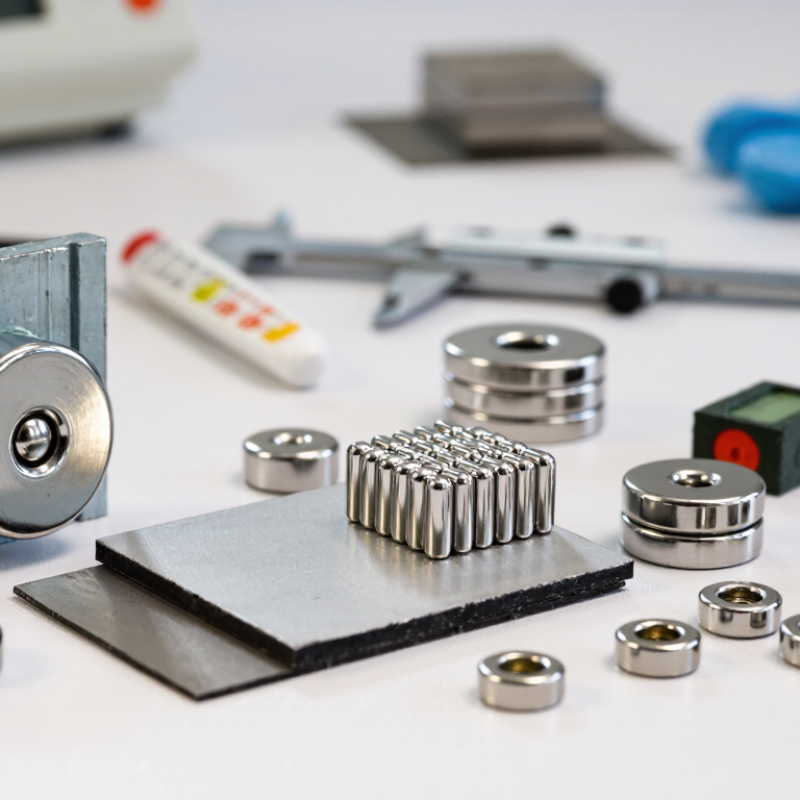
Define the Load, Air Gap, and Steel Thickness Before Comparing Pull Ratings
10 Tips to Choose Super Strong Magnets?
Define the Load, Air Gap, and Steel Thickness Before Comparing Pull Ratings
A pull rating only means something when its test conditions match your application. Define the load’s weight, direction, and movement: a magnet holding a steel plate vertically faces different demands from one supporting a stationary object overhead. Add a safety margin for vibration or accidental knocks. Small details matter. Paint, rust, a curved surface, or a thin washer can create an air gap and reduce holding force. Even a sheet of paper between magnet and steel changes the contact.
Check the steel, too. Thin steel may saturate before the magnet reaches its advertised pull force. ASM Handbook data place the saturation flux density of common low-carbon steels roughly around 1.6–2.1 tesla, with the exact value depending on grade and processing. That range is a warning, not a guaranteed design value. IEC 60404-5 describes measurement methods for permanent-magnet material properties; it does not make pull ratings from different assemblies directly comparable. Ask how each rating was tested: steel grade and thickness, contact surface, and whether the pull was perpendicular. A catalogue figure can still mislead. I would rather compare magnets under my actual conditions than trust one impressive number.
10 Tips to Choose Super Strong Magnets: Define the Load, Air Gap, and Steel Thickness Before Comparing Pull Ratings
Air gaps can sharply reduce holding force. This idealized magnetic-circuit estimate shows relative force for a fixed 10 mm-thick magnet as the gap increases.
Estimated relative force is normalized to 100% at zero gap. The model assumes a fixed magnet with relative permeability 1.05 and a sufficiently thick, unsaturated steel target; it excludes leakage and other real-world effects. Actual pull force depends on the magnet, load direction, contact surface, air gap, and steel thickness. Compare ratings only when test conditions match your application.
Compare NdFeB Grades: N35–N52 Corresponds to About 35–52 MGOe
NdFeB grades N35 to N52 indicate maximum energy product, not a direct pull-force rating. Typical industrial grade tables place N35 around 35 MGOe and N52 around 52 MGOe; exact limits vary slightly by specification. MGOe describes the magnet’s energy product, so a higher number can support a stronger field in a suitable design. It does not guarantee a specific lifting force.
IEC 60404-5:2015 outlines measurement methods for permanent-magnet properties. Use measured data, not grade labels alone, when comparing magnets. A small N52 disc may produce less holding force than a larger N35 block. Contact area, steel thickness, surface gaps, and magnet shape all matter. Even a thin coating or rough surface can reduce contact.
For a practical choice, compare the full demagnetization curve, operating temperature, and listed tolerances. N52 is not always the best fit. Higher grades can be more sensitive to heat, and the extra energy product may bring little benefit in a poorly matched assembly. I’d check the actual dimensions and working conditions before paying for the top grade. Small details matter.
Check Operating Temperature: Standard N-Grade NdFeB Is Often Rated to 80°C
Standard N-grade neodymium magnets are often rated for maximum operating temperatures of 80°C. That figure is a useful starting point, not a guarantee for every setup. A magnet near a warm motor may heat unevenly, especially inside a tight steel housing with little airflow. Heat can reduce its magnetic strength, and some losses may be permanent. Small parts matter.
Tip: Check the magnet grade and the supplier’s temperature rating before choosing. Measure the temperature where the magnet will sit, not just the room temperature. If the assembly may approach 80°C, leave a safety margin or consider a higher-temperature grade. A few degrees can matter.
Also consider how the magnet is loaded and mounted. Strong opposing magnetic fields can make a magnet more vulnerable to heat-related demagnetization. A rating on a data sheet cannot describe every real assembly. Test a sample under expected operating conditions, then check its holding force after repeated heating and cooling. This step takes time, and it can reveal a weak assumption before installation. Don’t guess.
Verify Magnetic Test Data Against ASTM A977/A977M
Choosing a super-strong magnet starts with comparable measurements, not a dramatic pull-force number.
ASTM A977/A977M covers hysteresigraph testing of high-coercivity permanent-magnet materials. Reports can include remanence (Br), intrinsic coercivity (Hcj), and maximum energy product (BHmax). These properties describe different behavior; BHmax alone cannot predict holding force across an air gap. Ask for the test method, specimen dimensions, magnetization direction, temperature, and full demagnetization curve. Surface gauss readings are not a substitute for standardized material testing.
Tips: Match the report to the exact grade and production lot; confirm ASTM A977/A977M testing; inspect Br, Hcj, and BHmax separately; check units and temperature; request calibration and measurement uncertainty; compare like-shaped samples; verify magnetization direction; review the full curve; retest retained samples when results seem unusual; and check suitability for your operating gap, heat, and load. Small details matter. A polished certificate can still hide mismatched test conditions.
The USGS Mineral Commodity Summaries 2025 estimates 2024 global rare-earth mine production at
390,000 metric tons of rare-earth-oxide equivalent.
This figure describes market scale, not magnet strength. Treat it as context, never as a replacement for lot-specific test data. If a supplier provides only surface gauss or a pull-force claim, request an ASTM-based report and clarify the test fixture. Standardized material data helps narrow choices, but the finished assembly still needs application testing. I would not skip that check.
Select Shape, Coating, and Mounting, Then Test Pull Force in Use
Choose the magnet shape for the load path, not appearance. A cup-shaped magnet can focus its holding force against a flat steel surface, while a bar may suit a long, narrow contact area. Check the mating metal’s thickness and finish; thin steel, paint, and small air gaps can reduce real-world grip. Coatings matter too. Nickel-based finishes suit many indoor uses, but damp or salty environments need corrosion-resistant protection. Mounting changes the result: a countersunk hole, adhesive layer, or uneven bracket can create a gap or peel force. Small details matter.
The USGS Mineral Commodity Summaries 2025 estimated 2024 global rare-earth mine production at 390,000 metric tons, including 270,000 in China. These figures describe mined rare earths, not magnet pull force. That distinction matters. A material statistic cannot tell you how a magnet will perform on your fixture. Treat the catalogue rating as a starting point: ratings commonly assume clean, thick steel and a direct pull, not sideways sliding.
Test the assembled part on the actual surface, with its real coating, gap, and mounting hardware. Use a force gauge; record the peak force and repeat the test. Then check shear, vibration, and operating temperature. One easy mistake is testing only a perfect steel plate. Real installations are less tidy.
Conclusion
Choosing Super Strong Magnets starts with defining the job they need to do. Estimate the load, measure the gap between the magnet and the steel surface, and check the steel’s thickness before comparing pull ratings. These factors can greatly affect real-world holding force, so a rating measured under ideal conditions may not match performance in your application. Compare NdFeB grades as well: N35 through N52 broadly represents maximum energy products of about 35 to 52 MGOe, but a higher grade is not automatically the best choice for every design.
Next, check the magnet’s operating temperature. Standard N-grade NdFeB magnets are often rated for use up to around 80°C, though exact limits depend on the product and conditions. Review magnetic test data and confirm that the measurement method aligns with ASTM A977/A977M where applicable. Finally, choose a suitable shape, coating, and mounting arrangement, then test pull force in the actual setup. Practical testing helps account for gaps, surface condition, alignment, and other factors that specifications alone may not capture.