
What Is the Strongest Magnet in the World in 2026?

Time:2026-10-08 Author:Sienna
0%

What is the Strongest Magnet In The World in 2026? The answer depends on how “strongest” is measured. Continuous field, pulsed field, laboratory scale, and commercial availability describe different achievements. A magnet producing 45 teslas continuously is not directly comparable with a pulsed system exceeding 100 teslas for milliseconds.

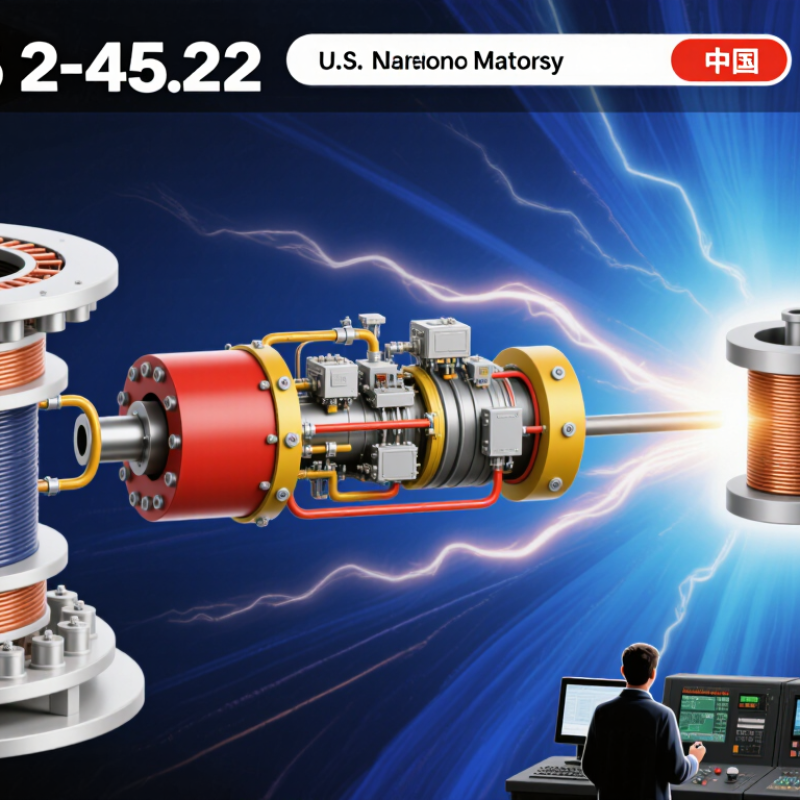
Public facility records provide the clearest evidence. The U.S. National High Magnetic Field Laboratory reports a 45-tesla hybrid magnet for sustained research fields. China’s High Magnetic Field Laboratory has also reported a 45.22-tesla resistive magnet, placing it among the most powerful steady-field systems ever built. These machines use superconducting and resistive technologies, complex cooling, and enormous electrical power. They are research instruments, not industrial lifting magnets. The distinction matters.

Pulsed magnets reach higher peaks. However, their fields last briefly and can place severe stress on coils, sensors, and test samples. The International Energy Agency’s Global Critical Minerals Outlook highlights growing demand for rare earth elements and other materials used in advanced magnetic technologies. The U.S. Geological Survey’s Mineral Commodity Summaries also tracks the supply risks surrounding these materials. Those reports support a broader point: magnetic strength depends on engineering, materials, energy, and reliability.

So, what is the Strongest Magnet In The World? In 2026, a single winner may be misleading. The strongest continuous magnet and the strongest pulsed magnet are different champions. Public records can also change quietly. That uncertainty deserves attention. This guide compares verified field strength, operating time, technology, and practical use, rather than repeating an impressive number without context.
What Is the Strongest Magnet in the World in 2026?

Defining What “Strongest Magnet” Means in 2026

What Is the Strongest Magnet in the World in 2026?

“Strongest” does not describe one universal magnet. It depends on the measurement, duration, and purpose. Magnetic field strength is usually measured in teslas. A laboratory magnet producing 40 teslas continuously may outperform a 100-tesla system that lasts only milliseconds. The first is stable and usable for experiments. The second is spectacular, but highly temporary.

There are several competing definitions. Continuous-field magnets create powerful fields for hours, often using superconducting or resistive technology. Pulsed magnets reach much higher values, but they demand extreme electrical energy and careful structural control.

Permanent magnets are judged differently. Their surface field, magnetic energy, size, and resistance to demagnetization all matter. A small permanent magnet can feel surprisingly strong near steel, yet lose most of its pull across a few centimeters.

Distance changes everything. Shape matters too. A magnet’s lifting force depends on the contact area, air gap, steel thickness, and magnetic circuit. Comparing two magnets by tesla alone can therefore mislead readers. I have seen product descriptions blur field strength with pulling power. That shortcut sounds convincing, but it is incomplete.

In 2026, the most accurate answer may be a category: the strongest sustained field, the strongest short pulse, or the strongest practical permanent magnet. The wording remains imperfect.

How Magnetic Strength Is Measured and Compared

What Is the Strongest Magnet in the World in 2026?

How Magnetic Strength Is Measured and Compared

The phrase strongest magnet sounds precise, but it is not. Researchers usually mean the highest magnetic field measured in teslas. A laboratory magnet can create an enormous peak briefly, while another holds a lower field for hours. In 2026, pulsed research systems can exceed 100 teslas for tiny fractions of a second. Continuous-field systems remain much lower, often around several dozen teslas. Exact records may change as facilities improve their equipment.

Tesla measures magnetic flux density, not total pulling power. A calibrated Hall probe, nuclear magnetic resonance sensor, or search coil can measure this field. The result depends on location, timing, and measurement uncertainty. A magnet may reach 40 teslas at its center, but only inside a narrow working space. That detail matters. Field uniformity is essential for imaging and materials research, while peak intensity matters for short experiments.

Comparison becomes harder when engineers include bore size, cooling demand, operating time, and energy consumption. A small pulsed magnet may produce a higher number than a large steady magnet. It is not automatically more useful. A steep field gradient can create greater force on nearby objects, even when the central field is lower. A practical mistake is comparing headline numbers alone. I would also question any record that omits pulse duration, measurement method, or usable volume. The numbers are real, but the comparison is imperfect.

The World’s Most Powerful Laboratory Magnets

What Is the Strongest Magnet in the World in 2026?

The strongest laboratory magnet depends on how its field is measured. For continuous operation, modern hybrid systems reach about 45.5 tesla, over 900,000 times stronger than Earth’s magnetic field. This figure is reported in recent high-field facility performance reports and technical papers presented at international magnet engineering conferences. Such magnets combine resistive and superconducting coils. The resistive section produces intense field strength, while the superconducting section helps maintain stability. A small sample sits inside a narrow bore, often surrounded by heavy cooling equipment and thick structural supports.

Pulsed magnets reach much higher values. Non-destructive systems can exceed 100 tesla, but only for milliseconds.

Engineering reports from national high-field research facilities describe peak fields above 100 tesla during material and quantum experiments. The trade-off is severe. Coils face enormous electromagnetic stress, rapid heating, and difficult measurement conditions. The data can also become less reliable near the pulse maximum.

This point deserves more caution than many headlines suggest. A record field is not automatically the most useful field.

Continuous magnets support imaging and long experiments,

while pulsed systems reveal short-lived electronic behavior.

In practice, scientists compare field strength, pulse duration, sample volume, and measurement accuracy. The biggest number wins only one part of the argument.

How High-Field Magnets Generate Extreme Magnetic Forces

The phrase “strongest magnet” sounds simple, but it hides an important measurement problem. In 2026, laboratories may report different leaders for continuous, pulsed, or practical magnetic fields. Some continuous systems exceed 40 teslas, while pulsed magnets can reach much higher values for milliseconds. The record depends on duration, usable space, and measurement method. Numbers alone can mislead.

High-field magnets create extreme forces through field strength, field gradients, and electric current interactions. Resistive coils use intense currents through copper conductors, producing heat that powerful cooling systems must remove. Superconducting coils reduce electrical losses, but they require very low temperatures and careful protection against sudden failure. Hybrid designs combine both approaches, concentrating fields inside a small experimental space. A charged particle feels a force described by F = qv × B. Magnet coils also experience J × B forces, which try to pull, twist, and burst the structure apart. Engineers counter them with thick support rings, precise alignment, and constant monitoring. During operation, vibration, coolant flow, and microscopic material defects can matter. That detail is easy to underestimate. The strongest field is not automatically the most useful one. Researchers also judge stability, bore size, energy efficiency, and how safely experiments can run. I think the word “strongest” remains imperfect, because a brief peak may teach less than a stable field. Better comparisons should publish duration, volume, uncertainty, and operating conditions beside every record.

What Is the Strongest Magnet in the World in 2026?

How High-Field Magnets Generate Extreme Magnetic Forces

The strongest magnet depends on how the field is produced. Continuous-field magnets can sustain approximately 45.5 teslas, while pulsed systems can briefly exceed 100 teslas. Destructive pulsed experiments may reach around 1,000 teslas, but the magnet is damaged during the pulse. The logarithmic scale shows the enormous range between Earth's magnetic field and extreme laboratory fields.

Applications and Safety Challenges of Ultra-Strong Magnets

In 2026, “the strongest magnet” depends on how strength is measured. Continuous-field systems can reach roughly 45 teslas, while pulsed magnets produce far higher fields for brief moments. These facilities use hybrid superconducting and resistive technologies, often filling rooms with cooling equipment, power systems, and monitoring instruments. A neat ranking is misleading.

Ultra-strong magnets help researchers study superconductivity, quantum materials, medical imaging, and plasma behavior. A tiny sample may sit inside a narrow bore while sensors record changes invisible to the human eye. Engineers also use intense fields to test metals, improve magnetic separation, and explore possible fusion technologies. The work is precise, but not effortless. Heat, vibration, and electrical noise can distort results.

Safety challenges are immediate. Loose steel tools can become fast-moving projectiles. Electronic devices may fail several meters away. Pacemakers and other implants require strict exclusion zones. Superconducting magnets can also experience a quench, releasing stored energy and cold gas suddenly. Trained staff use layered barriers, access controls, remote monitoring, and written emergency procedures. Still, procedures are not magic. A forgotten wrench, an open door, or a rushed inspection can create serious danger, so every experiment needs repeated checks and honest review.

What Is the Strongest Magnet in the World in 2026? Applications and Safety Challenges of Ultra-Strong Magnets
Magnet or Field Category Representative Magnetic Field Operating Mode Typical Duration Main Applications Key Safety Challenges 2026 Status
Record-class hybrid magnet About 45.5 tesla Steady-state field produced by combining superconducting and resistive magnet technologies Continuous operation, subject to facility cooling and power limits Quantum materials, high-field physics, magnetic phase transitions, spectroscopy, and condensed-matter research Extreme stored magnetic energy, strong attraction of ferromagnetic objects, high electrical currents, cooling-system failure, and projectile hazards Generally regarded as the strongest routinely available continuous laboratory-class magnet field
High-field resistive magnet About 30–35 tesla Continuous field generated by water-cooled copper-alloy coils Minutes to hours, depending on power and cooling capacity Materials research, electron-spin studies, magnetism, chemical analysis, and calibration experiments Very high electrical power, intense heat removal, coil stress, conductor failure, and sudden release of stored energy A practical workhorse for continuous high-field research
High-temperature superconducting magnet 20 tesla class and above in research systems Persistent or near-persistent operation after the conductor is cooled below its critical temperature Potentially continuous while cryogenic conditions are maintained Compact research magnets, particle-beam systems, medical imaging development, fusion research, and advanced instrumentation Quench events, cryogenic burns, oxygen-deficiency risks, mechanical forces, and loss of superconductivity Rapidly advancing technology, but the maximum field depends strongly on conductor design and system size
Nondestructive pulsed magnet About 80–100 tesla Short magnetic-field pulse generated by capacitor banks and reinforced coils Typically microseconds to milliseconds Transient superconductivity, ultrafast materials science, high-field spectroscopy, and measurements of electronic properties Explosive coil failure, electromagnetic shock waves, intense noise, high-voltage capacitor hazards, and rapid mechanical stress Among the strongest experimentally useful fields that can be generated without intentionally destroying the magnet system
Destructive pulsed magnet Above 100 tesla The magnet or conductor is intentionally damaged during the pulse Usually microseconds or less Extreme-field matter research, phase-transition studies, plasma physics, and testing of theoretical models Fragmentation, blast pressure, intense current, high-voltage discharge, electromagnetic interference, and hazardous debris Can exceed nondestructive systems, but it is not a reusable everyday magnet
Explosive flux-compression system Hundreds to more than 1,000 tesla in specialized experiments Explosive or implosive compression of magnetic flux Nanoseconds to microseconds Specialized high-energy-density physics and controlled laboratory experiments Explosion, extreme pressure, high-energy plasma, dangerous debris, radiation concerns in some experiments, and total system destruction Potentially the highest laboratory-generated magnetic fields, but not a conventional reusable magnet
Clinical magnetic-resonance imaging field Typically 1.5–3 tesla Continuous superconducting field Continuous while the magnet remains energized Medical diagnosis, functional imaging, spectroscopy, and research imaging Projectile accidents, implant interaction, radio-frequency heating, acoustic noise, and cryogen venting during a quench Much weaker than record research magnets, but widely deployed and subject to strict access controls
Earth’s surface magnetic field Approximately 25–65 microtesla Natural, slowly varying geomagnetic field Continuous Navigation, geophysics, space-weather monitoring, and animal-orientation research Minimal direct attraction hazard; the principal risks arise from solar storms affecting satellites, power grids, and communications Reference level for comparing the strength of artificial magnets
Interpretation: There is no single “strongest magnet” under every definition. The answer depends on whether the comparison concerns continuous fields, nondestructive pulses, destructive pulses, or explosive flux-compression experiments. One tesla equals 10,000 gauss.

FAQS

What does “strongest magnet” mean in 2026?

It depends on field strength, duration, size, and purpose. A record number alone cannot answer everything. The wording stays imperfect.

What is the strongest continuous magnetic field?

Modern hybrid laboratory systems can reach about 45.5 teslas continuously. They combine resistive coils with superconducting coils. Their fields can operate for hours.

Can pulsed magnets produce stronger fields?

Yes. Non-destructive pulsed systems can exceed 100 teslas for only milliseconds. Very brief.

Why are pulsed magnets not always considered the best?

Their coils face intense stress, rapid heating, and difficult measurements. Continuous magnets support longer experiments. Bigger is not automatically better.

How do high-field magnets create extreme forces?

Powerful electric currents generate magnetic fields inside tightly supported coils. The coils experience forces that can pull, twist, or burst their structures.

What role do superconducting coils play?

Superconducting coils reduce electrical losses and help maintain stable fields. They require extremely low temperatures and careful protection against sudden failure.

Why do distance and shape affect magnetic pulling power?

Air gaps reduce force sharply. Contact area, steel thickness, and magnetic circuit design also matter. A small gap can change everything.

Are teslas enough for comparing two magnets?

No. Teslas describe field strength, not complete lifting performance. Researchers should also compare duration, usable volume, stability, uncertainty, and operating conditions.

What is the strongest practical permanent magnet?

The answer depends on surface field, energy, size, and resistance to demagnetization. A small magnet may grip steel strongly nearby, then weaken across a few centimeters.

Conclusion

The Strongest Magnet In The World is not defined by a single number or one universal design. In 2026, magnetic strength may refer to peak field intensity, sustained performance, field stability, or the size of the usable magnetic region. Scientists compare magnets using units such as tesla and evaluate how effectively they maintain an intense, controlled field under demanding conditions. Laboratory systems can produce extraordinary magnetic forces by combining powerful electrical currents, specialized coils, advanced cooling methods, and carefully engineered structural support.

These ultra-strong magnets are valuable tools for medical research, materials science, energy studies, particle experiments, and the development of advanced technologies. However, their power also creates serious safety challenges. Strong magnetic fields can attract nearby metal objects, interfere with electronic equipment, affect certain medical devices, and generate intense mechanical stresses. For this reason, operation requires restricted access, detailed monitoring, protective infrastructure, and strict professional procedures. The strongest magnet is therefore best understood as a carefully controlled scientific system rather than simply the largest or most attractive magnet.

Sienna

Sienna

Sienna is a skilled marketing professional with a deep expertise in our company’s core products and services. With a passion for innovation and detail, she plays a pivotal role in crafting insightful blog posts that not only highlight the unique features of our offerings but also provide valuable......