
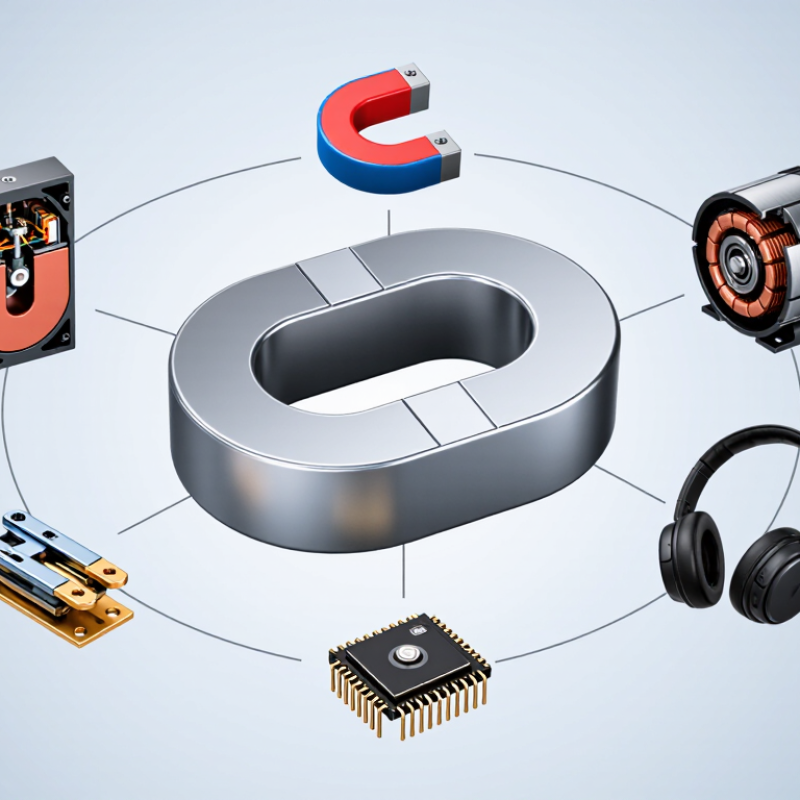
Neo Magnets, commonly called neodymium magnets, are compact permanent magnets made mainly from neodymium, iron, and boron. Their strength allows small components to hold, move, or sense objects in many everyday products. A magnet inside a speaker helps turn electrical signals into sound. In electric motors, magnetic force helps produce motion. You may also find these magnets in headphones, sensors, small latches, and some renewable-energy equipment.
Small, but powerful.
Their uses depend on more than strength alone. Engineers consider a magnet’s shape, grade, coating, operating temperature, and surrounding materials before choosing one. A disc magnet may suit a sensor, while a shaped assembly may fit a motor. Protective coatings can help limit corrosion, but they do not make every magnet suitable for damp or harsh environments. The details matter.
Neo Magnets are useful, but they are not universal replacements for other materials. They can be brittle, may lose performance at excessive temperatures, and can pinch skin when strong pieces snap together. Their magnetic fields may also affect certain electronic devices, so handling and storage deserve care. Product specifications and manufacturer guidance are more reliable than appearance alone. And there are trade-offs. It is easy to focus on impressive holding force and overlook heat, corrosion, or safe handling. Understanding those limits helps explain where Neo Magnets perform well—and where another solution may be better.
Neo magnets are sintered neodymium-iron-boron materials. Their main magnetic phase is commonly written as Nd2Fe14B, though commercial formulations may include small amounts of other elements. The USGS Mineral Commodity Summaries 2024 estimated global rare-earth mine production at 350,000 metric tons of rare-earth-oxide equivalent in 2023, with 240,000 tons from China. These figures describe mined material, not magnet output, but they show why supply-chain context matters.
Grade codes help describe magnetic performance. In codes such as N35 or N52, the number roughly corresponds to maximum energy product in megagauss-oersteds; it does not directly state the magnet’s pull force. Suffixes such as M, H, SH, and UH generally indicate higher coercivity and improved heat tolerance, but naming conventions can vary. A larger air gap or smaller contact area can still reduce holding force sharply.
Easy to overlook. I treat a grade label as a starting point, not a complete specification.
Tips: Match the grade to operating temperature, shape, and available space. Check the supplier’s full data sheet for energy product, coercivity, and temperature limits. If the application is critical, test the actual assembly; a code alone cannot predict its real-world performance.
Neo magnets, commonly made from neodymium, iron, and boron, deliver strong magnetic force in compact parts. Their energy product can reach about 55 MGOe, or roughly 438 kJ/m³. This figure describes the maximum product of magnetic flux density and field strength on a magnet’s demagnetization curve. It is not a measure of energy a magnet can freely release.
That distinction matters. A magnet rated near 55 MGOe can help designers build smaller motors, loudspeaker drivers, sensors, and magnetic couplings. In a motor, for example, compact magnets can support strong torque without taking up much space. The actual result depends on the magnet’s shape, operating temperature, and surrounding magnetic circuit. A high rating alone does not guarantee better performance.
Small details count. Heat can reduce a magnet’s output, and nearby steel changes how its field behaves. The 55 MGOe figure is also a peak material value, not a promise for every finished component. Engineers check the operating point and safety margin for the intended use. It can be easy to focus on the headline number. The practical design is less tidy.
Neo magnets, usually made from neodymium, iron, and boron, produce strong magnetic fields in compact spaces. This makes them useful in motors, where they help convert electrical energy into movement.
In electric vehicles, they can support smaller, lighter drive motors; they also appear in fans, pumps, and power tools.
The International Energy Agency reported nearly 14 million electric-car sales worldwide in 2023, about 18% of all car sales. That figure shows the scale of one motor application, though it does not tell us how many vehicles use neo magnets.
Small parts. Big effect.
In speakers and headphones, a neo magnet sits near the voice coil, helping the cone move and create sound. In sensors, magnets can work with Hall-effect components to detect position or rotation, such as in a motor’s speed feedback system.
Compact devices may use them in vibration motors, camera mechanisms, or small actuators.
Their strength is useful, but it is not the whole story: heat can reduce magnetic performance, and exposed magnets can corrode, so manufacturers select grades and coatings for the operating conditions.
It is easy to overstate how universally suitable they are. The right choice depends on temperature, space, and the job the device must perform.
Neodymium-iron-boron magnets help power compact motors, sensors, speakers, and magnetic couplings. The U.S. Department of Energy’s 2023 Critical Materials Assessment identifies these magnets as important to electric-vehicle motors and wind technologies. Their small size is useful, but heat can narrow where they work reliably. A magnet inside a warm motor housing may face a very different environment from one holding a note on a cool steel cabinet.
Standard N-grade sintered NdFeB magnets are commonly rated for maximum operating temperatures near 80°C, according to industry grade tables and technical data sheets. That is a design limit, not a promise of identical performance at every temperature. Around 80°C, a magnet’s available flux may fall, while prolonged heat or a strong opposing magnetic field can cause partly irreversible loss. Typical technical data also show remanence temperature coefficients near −0.1% per °C, though exact values vary by material and operating point. Still, the rule is blunt. Check the actual demagnetization curve, not just the grade label. For a motor near a hot bearing, engineers may choose a higher-temperature grade and test the assembly under load; a bench test at room temperature can miss the real problem.
Selecting a neo magnet means matching grade, coating, shape, and load to the actual job. Grade indicates magnetic strength, but a higher grade is not automatically better. For example, an N35 disc may suit a small sensor mount, while a stronger grade may help where space is limited. Check the working temperature, too: heat can reduce a magnet’s performance, and some high-temperature grades trade strength for stability.
Small details matter.
Coating protects the magnet from corrosion and chipping. Nickel is common for dry indoor settings; epoxy may offer better moisture protection, but scratches can expose the base material. Shape also changes how force is delivered. A shallow disc, a block, and a ring can behave differently in the same assembly because contact area and magnetic path differ. Measure the gap, including paint or plastic. It counts.
Rated pull force is usually measured under ideal contact with thick steel, not across a real-world gap. For a vertical mount, allow for sliding; for overhead use, include a conservative safety margin and account for vibration.
The USGS Mineral Commodity Summaries 2025 estimates 2024 global rare-earth mine production at about 390,000 metric tons; this is raw-material context, not magnet output. The IEA’s Global Critical Minerals Outlook 2024 also identifies permanent magnets as an important rare-earth use in clean-energy technologies.
Test the finished assembly under its real temperature, surface, and load conditions. A calculation helps, but it can still miss something.
They are sintered neodymium-iron-boron materials. Their main magnetic phase is commonly written as Nd₂Fe₁₄B. Small amounts of other elements may also be included.
The number roughly relates to maximum energy product. It does not directly state pull force. Think of it as a starting point.
No. A higher grade may help when space is limited, but temperature and the actual assembly matter. Stronger is not always more suitable.
They generally indicate higher coercivity and improved heat tolerance. Naming conventions can vary, so check the full data sheet.
Nickel is common for dry indoor settings, while epoxy may offer better moisture protection. Scratches can expose the base material. Discs, blocks, and rings deliver force differently.
Rated pull force usually assumes ideal contact with thick steel. Paint, plastic, an air gap, or a smaller contact area can reduce holding force sharply. Easy to miss.
Allow for sliding on vertical surfaces. For overhead use, include a conservative safety margin and account for vibration. I may still underestimate a real surface.
Match its grade, shape, coating, and temperature limits to the job. Test the finished assembly with its actual surface, gap, temperature, and load. Testing helps.
Neo Magnets are powerful permanent magnets made primarily from neodymium, iron, and boron (NdFeB). Their grade codes indicate differences in magnetic performance, and high grades can reach an energy product of about 55 MGOe, or roughly 438 kJ/m³. This strong magnetic output makes them useful in compact designs where reliable force and efficient performance are important.
Common applications include motors, speakers, sensors, and many electronic devices. Choosing a suitable magnet also means considering its operating temperature: standard N-grade magnets often have a maximum rating of around 80°C. Grade, coating, shape, and expected load all affect how well a magnet will perform in a particular setting. Matching these factors to the intended use can help ensure dependable performance and reduce the risk of damage during operation.
