
China has become a central manufacturing base for Big Magnets used in wind turbines, electric vehicles, industrial motors, medical equipment, and advanced automation. The International Energy Agency’s Global Critical Minerals Outlook 2025 reports that China supplies about 91% of refined rare earth elements and approximately 94% of permanent magnets globally. These figures explain why international buyers often examine Chinese suppliers before making large-volume decisions.
Scale alone does not guarantee dependable performance. A large neodymium magnet may look simple, yet its coating, magnetic grade, dimensional tolerance, and temperature resistance affect the final application. Experienced manufacturers usually verify these details through material certificates, batch testing, pull-force measurements, and controlled packaging. The U.S. Department of Energy has also identified rare-earth permanent magnets as strategically important for clean-energy and transportation supply chains.
Details matter.
For global buyers, supplier evaluation should include production capacity, export experience, quality management, and technical communication. ISO 9001 certification can support process consistency, but it should not replace independent inspection or application testing. This is where many purchasing plans become less certain. Reported market figures differ by scope, region, and magnet category, so buyers should avoid relying on one headline number.
A capable China Big Magnets manufacturer should provide practical engineering support, stable production schedules, traceable materials, and packaging designed for long-distance transport. Clear drawings and realistic specifications reduce costly revisions. The best partnership is not always the cheapest one. It is the supplier that can repeatedly deliver the required magnetic strength, size, surface protection, and documentation.
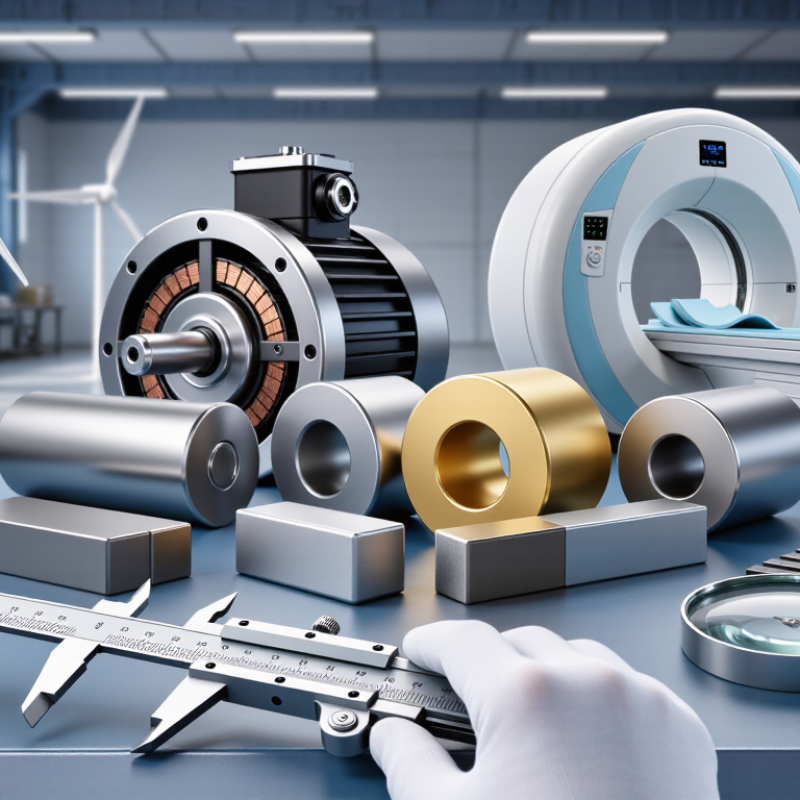
China Top Big Magnets Manufacturer for Global Buyers
China’s Big Magnet Manufacturing Industry and Global Market Role
China’s big magnet manufacturing industry supports energy, automation, transport, medical equipment, and industrial machinery. Large magnetic components often require precise dimensions, stable magnetic strength, and careful surface protection. Production begins with material selection and continues through pressing, sintering, machining, coating, and testing.
Manufacturers serving global buyers usually provide customized shapes, grades, tolerances, and packaging solutions. Experienced factories measure magnetic flux, dimensional accuracy, corrosion resistance, and temperature performance. These checks matter because a large magnet can affect an entire assembly when its strength varies. Documentation also supports traceability, export planning, and technical communication between engineers.
The industry remains highly competitive. Cost is important, but it should not replace process control. A lower quotation may hide weaker coatings, inconsistent tolerances, or limited testing records. Some supplier claims are still difficult to verify without samples and independent inspection. That is a practical weakness.
Global buyers increasingly examine supply continuity, environmental procedures, worker safety, and responsible material sourcing. China’s manufacturing network offers strong capacity and flexible customization, yet quality can differ between factories. Buyers should review drawings, inspection methods, sample results, and production experience before placing large orders. Clear communication prevents expensive misunderstandings. Small details matter.
| Industry Dimension | Verified Data | Unit / Period | Importance for Global Buyers | Reference |
|---|---|---|---|---|
| Main high-performance magnet material | Sintered neodymium-iron-boron (NdFeB) | Material category | NdFeB provides a high energy density for compact motors, generators, magnetic assemblies and industrial equipment. | International technical and industry literature |
| Key rare-earth inputs | Neodymium, praseodymium, dysprosium and terbium | Critical material group | These elements influence magnetic performance, coercivity and high-temperature stability in demanding applications. | U.S. Geological Survey, Rare Earths Commodity Information |
| China rare-earth mine production | 240,000 | Metric tonnes REO equivalent, 2023 | China was the largest reported national source of mined rare-earth material, supporting a substantial domestic magnet-material supply base. | U.S. Geological Survey, Mineral Commodity Summaries 2024 |
| Global rare-earth mine production | Approximately 350,000 | Metric tonnes REO equivalent, 2023 | The comparison indicates China represented approximately 68.6% of reported global mine production in 2023. | U.S. Geological Survey, Mineral Commodity Summaries 2024 |
| China’s estimated share of global rare-earth separation and refining | About 90% | Approximate global share, 2023 | A concentrated refining base can support shorter material-sourcing pathways for qualified magnet manufacturers. | International Energy Agency, Global Critical Minerals Outlook 2024 |
| China’s estimated share of permanent-magnet manufacturing | More than 90% | Approximate global share, recent industry estimates | The large production ecosystem offers broad access to sintering, machining, coating, magnetizing and assembly capabilities. | International Energy Agency, Global Critical Minerals Outlook 2024 |
| Common large-magnet product formats | Blocks, discs, rings, arcs, segments and custom assemblies | Product configuration | Format selection depends on magnetic circuit design, installation space, required pole arrangement and mechanical loading. | Standard permanent-magnet engineering practice |
| Typical industrial application sectors | Electric motors, wind-power generators, industrial automation, pumps, compressors and magnetic lifting systems | End-use sectors | These sectors commonly require controlled dimensions, stable magnetic output, corrosion protection and traceable quality inspection. | International Energy Agency; permanent-magnet engineering references |
| Common protection systems for NdFeB magnets | Nickel-copper-nickel, epoxy, zinc and other application-specific coatings | Surface-treatment category | Coating choice should reflect humidity, salt exposure, temperature, friction and assembly conditions. | IEC 60404 series and permanent-magnet manufacturing practice |
| International customs classification commonly used for metal permanent magnets | HS 8505.11 | Harmonized System heading | This classification is commonly used for permanent magnets and articles intended to become permanent magnets, of metal; import treatment may vary by destination. | World Customs Organization, Harmonized System |
| Core buyer quality checkpoints | Dimensions, magnetic flux, surface field, temperature performance, coating adhesion and corrosion resistance | Pre-shipment inspection criteria | These checks help confirm that large-format magnets meet drawings, magnetic specifications and end-use operating conditions. | IEC 60404 series; ISO 2768 dimensional-tolerance practice |
| Important procurement documentation | Technical drawing, material grade, tolerance specification, coating requirement, inspection plan and packing standard | Buyer-supplier documentation | Clear documentation reduces specification disputes and improves repeatability for international shipments. | Industrial procurement and quality-control practice |
Note: “Big magnets” is a commercial description rather than a separate international statistical category. Market data is therefore generally reported under permanent magnets, rare-earth materials, magnetic assemblies or related customs classifications.
Neodymium magnets offer high strength in compact designs. They suit motors, sensors, couplings, and automated equipment. Ferrite magnets cost less and resist corrosion. Samarium cobalt magnets tolerate high temperatures and harsh environments.
No. Size is not everything. Heat, air gap, shock, coating damage, and load direction can reduce performance. A smaller magnet may fit better and provide more controlled force.
Share dimensions, magnetization direction, magnetic grade, working temperature, air gap, load, and installation limits. State tolerances and surface requirements clearly. “Strong magnet” is too vague.
Engineers study the application before choosing dimensions. Computer simulation can predict flux distribution and weak corners. Large parts may need segmented designs. Simulations help, but they are never perfect.
Request material reports, magnetic test results, dimensional records, coating thickness, and temperature data. Calibrated magnetic meters can verify surface flux. Independent testing adds useful confirmation.
Measure dimensions and magnetic strength under stated conditions. Inspect corners, holes, coatings, and magnetization direction. Samples can mislead. A good sample does not guarantee every production batch.
Use strong internal packing with separation between heavy pieces. Check for chipped edges, cracked surfaces, and coating damage after arrival. Photograph the packaging before opening. Heavy magnets need careful handling.
Separate product prices from packaging, insurance, duties, freight, and port charges. Confirm customs classification with a qualified adviser. Keep extra production time available. Three weeks may become six.
Choosing maximum strength without checking the real assembly. Stronger is not always better. A controlled pull force may protect nearby parts. I would not trust a clean drawing alone.
China has become a major manufacturing hub for Big Magnets, serving industries such as renewable energy, mining, transportation, automation, medical equipment, and industrial machinery. Chinese manufacturers produce various large magnetic products, including permanent magnets, lifting magnets, magnetic assemblies, and custom-designed systems. Their capabilities typically cover material selection, magnetic circuit design, precision machining, surface treatment, assembly, and performance optimization to meet different application requirements.
For global buyers, product quality, consistency, safety, and export compliance are essential considerations. Reliable manufacturers generally use systematic testing for magnetic strength, dimensional accuracy, temperature resistance, corrosion protection, and mechanical performance, while supporting relevant international standards and certification requirements. Buyers should evaluate technical specifications, production capacity, quality-control procedures, packaging, lead times, communication, and after-sales support before placing an order. A clear understanding of application conditions and import regulations can help international customers select suitable Big Magnets and build a stable, efficient supply chain from China.
